

Understanding Acne. Personalising Treatment.
No two patients experience acne in the same way. At Emberwood Aesthetics, treatment begins with understanding your skin, the type of acne you have, and the factors that may be contributing to it before developing a personalised treatment approach.
Healthy Skin Begins With Understanding Acne
Acne is one of the most common skin conditions, affecting adolescents and adults alike. While many people associate acne with teenage years, persistent or adult-onset acne can occur at any stage of life and may contribute to long-term skin changes if left untreated.

At Emberwood Aesthetics, we believe successful acne treatment begins with understanding why your acne is developing, rather than simply treating individual breakouts. Get started with a consultation, where Dr Jolenda will assess your skin, identify the factors contributing to your acne and recommend a personalised treatment plan based on your individual needs.What is acne?
Acne is a common inflammatory skin condition that develops when hair follicles become blocked with excess oil, dead skin cells and other debris. While it most commonly affects the face, acne can also occur on the chest, back and shoulders.Acne affects people of all ages and can range from mild blackheads and whiteheads to larger, inflamed lesions. The severity and appearance of acne vary from person to person, which is why treatment should be tailored to the individual rather than the breakout alone.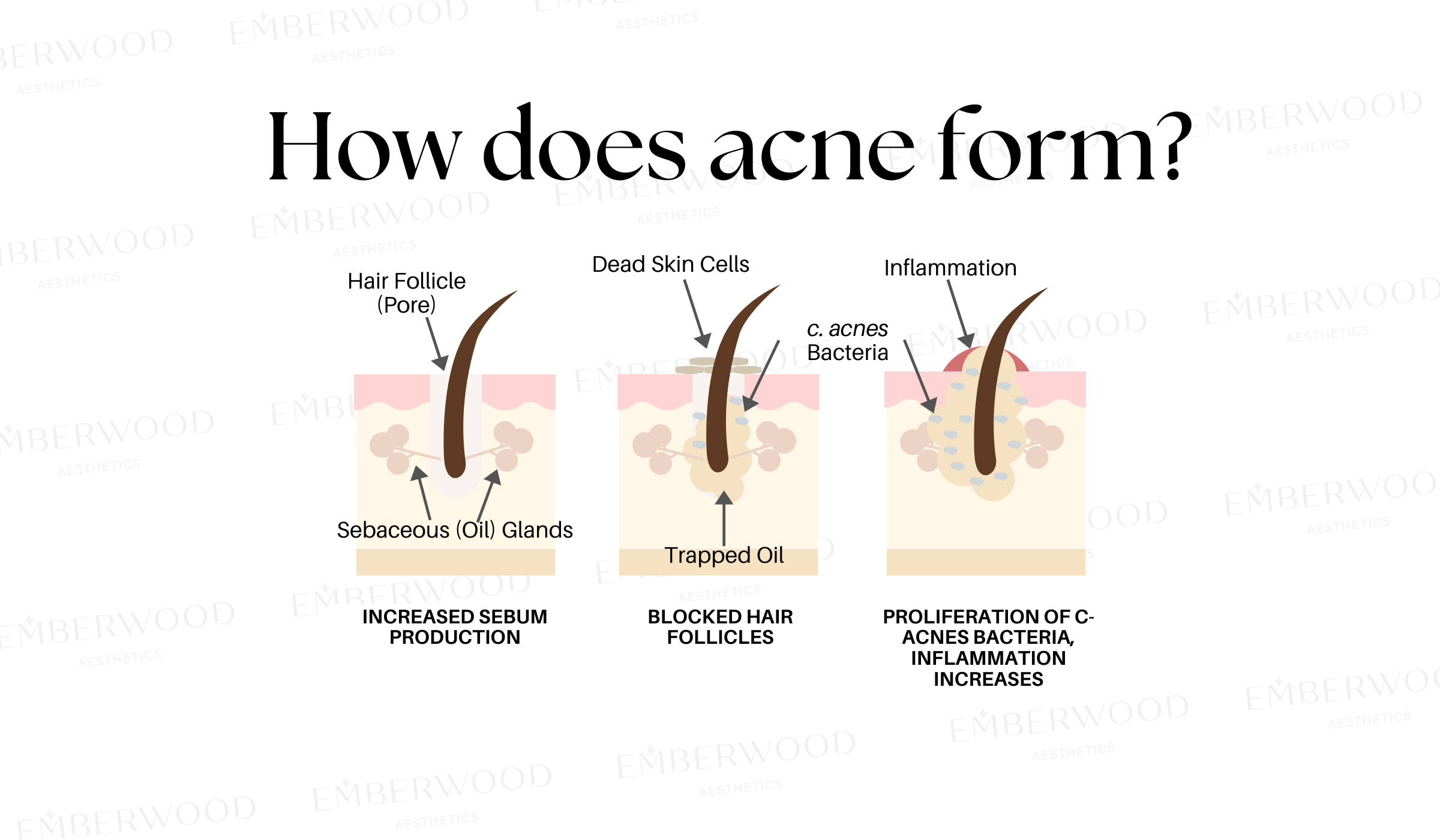
How does acne form?
Increased sebum (oil) production
Sebaceous glands naturally produce sebum to protect and lubricate the skin. Excess sebum production may increase the likelihood of blocked pores in susceptible individuals.
Blocked Hair Follicles
Dead skin cells that do not shed normally can mix with excess oil and accumulate within the hair follicle, forming clogged pores known as comedones.
Proliferation of Skin Bacteria
The skin naturally contains bacteria, including Cutibacterium acnes. Within blocked follicles, changes in the follicular environment may allow these bacteria to proliferate and contribute to inflammation associated with acne.
Inflammation
Inflammation contributes to the redness, swelling and tenderness seen in inflammatory acne lesions and plays an important role in the development and progression of acne.

Types of Acne
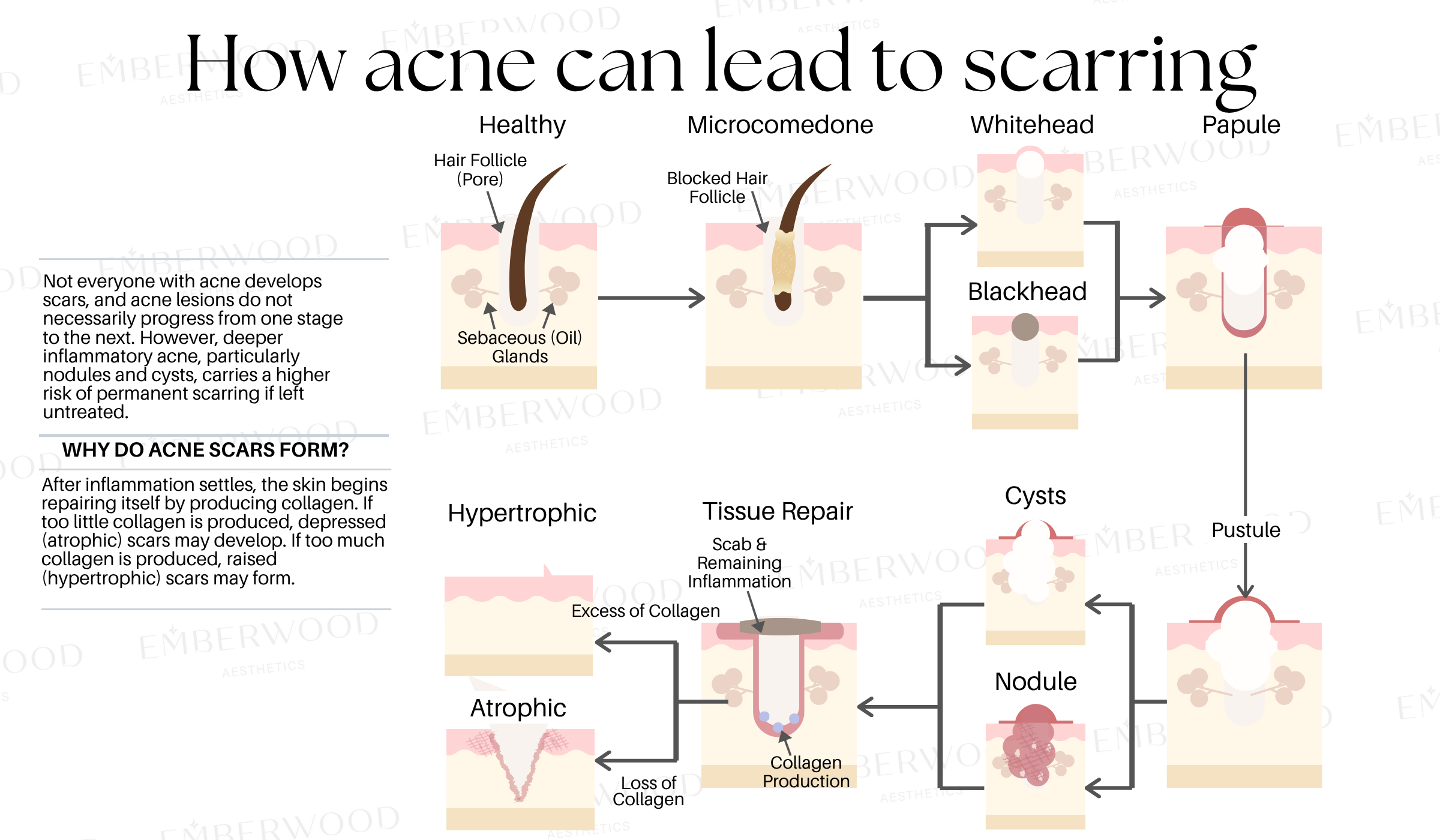
Acne can present with different types of lesions, ranging from non-inflammatory blocked pores to deeper inflammatory lesions. Many people experience a combination of different lesion types at the same time. The type and severity of acne can influence the most appropriate treatment approach. During your consultation, your doctor will assess the types of lesions present before recommending a personalised treatment plan.
Non-inflammatory acne
Whiteheads (Closed Comedones)
Small, flesh-coloured or white bumps that develop when a pore becomes blocked beneath the skin surface.
Blackheads (Open Comedones)
Blocked pores that remain open at the skin surface. The dark appearance is caused by oxidation rather than dirt.
Inflammatory Acne
Papules
Small, red, inflamed bumps that do not contain visible pus.
Pustules
Inflamed acne lesions containing visible pus.
Nodules
Larger, deeper inflammatory lesions that develop beneath the skin and are often painful or tender to the touch.
Cysts
Large, deep inflammatory lesions that extend beneath the skin and carry a higher risk of acne scarring if left untreated.
Acne Treatment
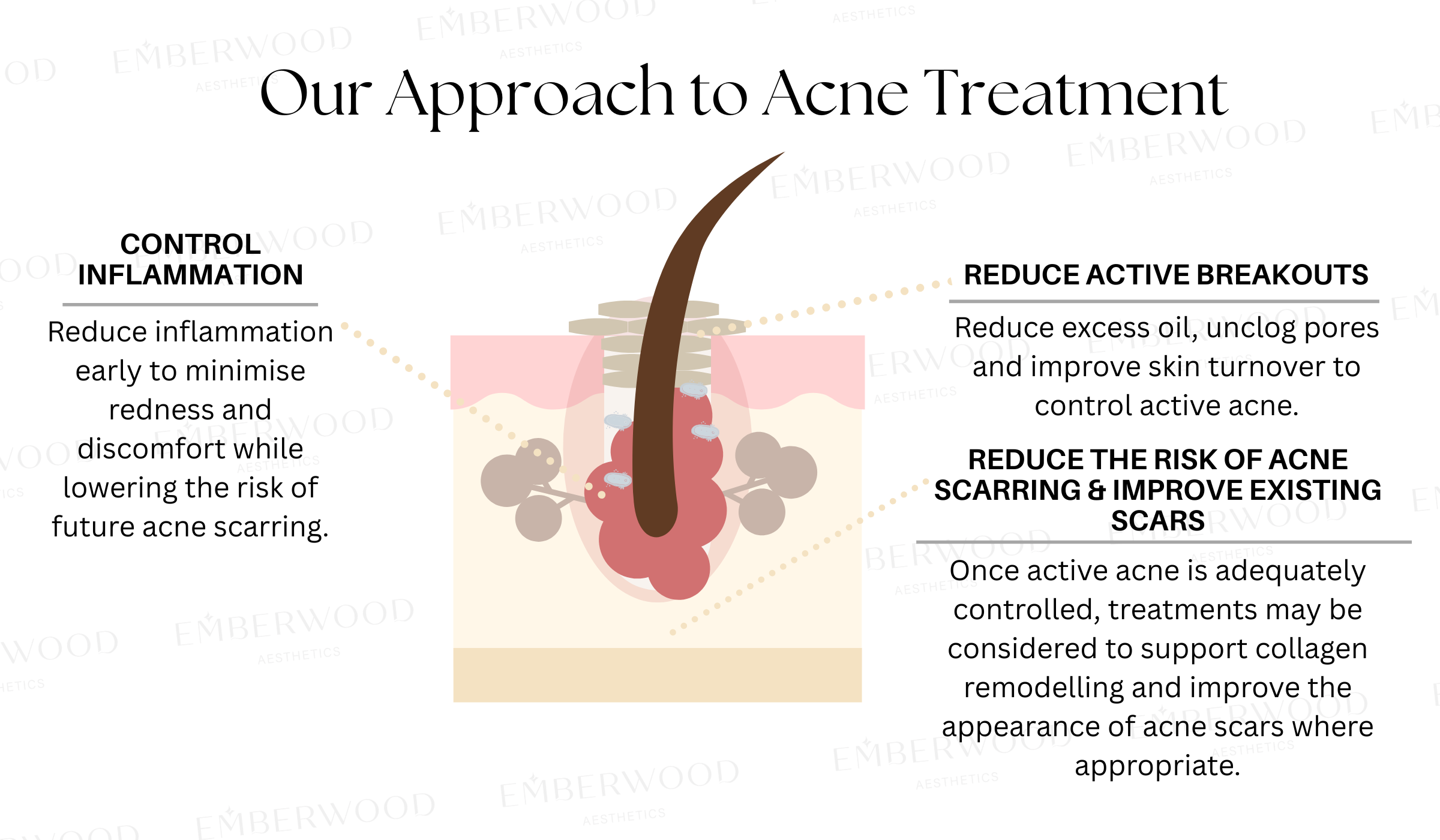
Successful acne treatment often involves addressing multiple aspects of acne simultaneously. Depending on the type and severity of your acne, your skin type, and your treatment goals, Dr Jolenda may recommend a personalised combination of treatments aimed at controlling inflammation, reducing active breakouts, and lowering the risk of long-term skin changes such as acne scarring. These treatment goals are often addressed concurrently as part of a personalised treatment plan.
-
Inflammation plays a central role in many forms of acne and contributes to redness, swelling and discomfort. Persistent inflammation may also increase the likelihood of post-inflammatory pigmentation and acne scarring if left unmanaged.
One treatment that may be considered is the Long-Pulsed Vascular Acne Laser, which has been found to be effective in treating acne by selectively targeting overactive sebaceous glands, which are responsible for producing excess oil that can clog pores and lead to acne.
Additionally, the laser treatment can also reduce inflammation and redness associated with acne, resulting in clearer, smoother skin in the long term.
-
Managing active acne often involves reducing blocked pores, controlling excess oil production and improving skin turnover. The most appropriate treatment depends on the type and severity of acne and may involve a combination of topical treatments, medications and in-clinic procedures.
Treatment options may include:
Chemical Peels (e.g. TCA) – Help exfoliate dead skin cells, reduce pore blockage and improve overall skin texture.
HydraFacial® Clarifying Treatment – A key clinical study published in the Journal of Clinical and Aesthetic Dermatology evaluated the HydraFacial Clarifying protocol in adults with mild-to-moderate acne.
Oral medications including isotretinoin and topical medications such as trifarotene could be prescribed where appropriate.
What to expect
Chemical Peels: A mild warming or stinging sensation during treatment, followed by approximately 1–3 days of light peeling depending on the peel performed.
HydraFacial: Generally well tolerated with minimal downtime, allowing most patients to resume their usual activities shortly after treatment.
-
One of the key goals of acne treatment is not only to improve active breakouts, but also to reduce the risk of long-term skin damage. Persistent inflammation may increase the likelihood of acne scarring, which is generally more challenging to manage once it has developed.
Once active acne is adequately controlled, procedures aimed at improving skin texture and supporting collagen remodelling may be considered where appropriate.
One such treatment is RF Microneedling, which combines fine microneedles with radiofrequency (RF) energy to create controlled thermal stimulation within the skin. This treatment is designed to support the skin's natural collagen-remodelling processes and may be considered for improving skin texture and the appearance of atrophic acne scars.
Research also suggests that RF microneedling also helps to reduce oil production and targets the root cause of stubborn, recurring, and cystic breakouts. Depending on your clinical assessment, it may be incorporated into a personalised treatment plan for individuals with persistent or recurrent acne, as well as those with existing acne scarring.
Why Early Acne Treatment Matters
Persistent or recurrent acne can contribute to ongoing inflammation within the skin. Over time, repeated inflammation may increase the likelihood of post-inflammatory pigmentation, post-inflammatory erythema and acne scarring. Once acne scars have developed, they can be more challenging to manage than active acne itself.

Acne treatment is also not limited to adults. Teenagers with persistent or inflammatory acne may benefit from an early medical assessment and an individualised treatment plan. Rather than waiting until acne becomes more severe or leaves lasting skin changes, early management may help reduce ongoing inflammation and lower the risk of future complications.

One of the most important goals of acne treatment is not simply to improve active breakouts, but also to minimise the risk of long-term skin changes. While not everyone with acne will develop scarring, persistent inflammation increases the likelihood of changes that may remain even after the acne has settled.

Learn more about how acne scars develop, the different types of acne scars, and the treatment approaches that may be considered when looking for Acne Scar Treatments
Frequently Asked Questions about acne
-
Although acne is commonly associated with adolescence, it can affect adults at any age. Adult acne may be influenced by a combination of hormonal changes, genetics, lifestyle factors, skincare products and other individual factors. A medical assessment can help determine the most appropriate treatment approach based on your skin and clinical history.
-
Acne may improve naturally in some individuals, particularly after adolescence. However, this is not always the case. Persistent or recurrent acne may continue into adulthood and can contribute to long-term skin damage and scarring if left unmanaged. If your acne is ongoing or worsening, it is advisable to seek a medical assessment.
-
Yes. Inflammatory acne may increase the likelihood of acne scarring, particularly when inflammation is persistent or severe. Early assessment and appropriate management may help reduce the risk of long-term skin damage or acne scarring.
-
If your acne is persistent, becoming more severe, leaving marks or scars, or affecting your confidence or quality of life, it may be appropriate to seek a medical assessment. Your doctor can evaluate your skin and recommend a treatment plan based on your individual concerns.
-
Many people try several skincare products before seeking medical advice, but not all acne responds to over-the-counter skincare alone. If your acne is persistent, recurrent or leaving marks or scars, a consultation can help determine whether your current skincare routine is appropriate and whether additional treatment options should be considered. The goal is to understand the underlying factors contributing to your acne and develop a personalised management plan based on your individual skin concerns.
-
Acne treatment is not limited to adults. Adolescents with persistent or inflammatory acne may also benefit from medical assessment and appropriate treatment. The most suitable management depends on factors such as age, acne severity and individual skin concerns.
-
Not necessarily. The most appropriate acne treatment depends on factors such as the type and severity of your acne, your skin condition, medical history and treatment goals. For some individuals, treatment may involve skincare, topical medications or procedural treatments, while others may benefit from oral medication.
If you have any concerns, please do share it with our Doctor during the consultation. Our Doctor will discuss the available treatment options with you and develop a personalised treatment plan based on your individual needs and preferences.
Ready to Take the First Step?
Every skin is unique. Book a consultation with Dr Jolenda to discuss your concerns and receive a personalised treatment plan tailored to your skin and goals.