
Pigmentation Treatment in Singapore
Why Does Pigmentation Happen?
Pigmentation is one of the most common skin concerns we treat at Emberwood Aesthetics, but it's also one of the most misunderstood.
Many patients point to a brown spot and simply call it "pigmentation." In reality, melasma, freckles, Hori's naevus, birthmarks, acne marks and sun spots are completely different conditions, each with its own underlying biology.
While they may look similar on the surface, they behave very differently beneath the skin. That's why a treatment that works brilliantly for one type of pigmentation may have little effect, or even worsen, another.
The first step towards clearer skin isn't choosing the right laser. It's making the right diagnosis.
What Actually Causes Pigmentation?
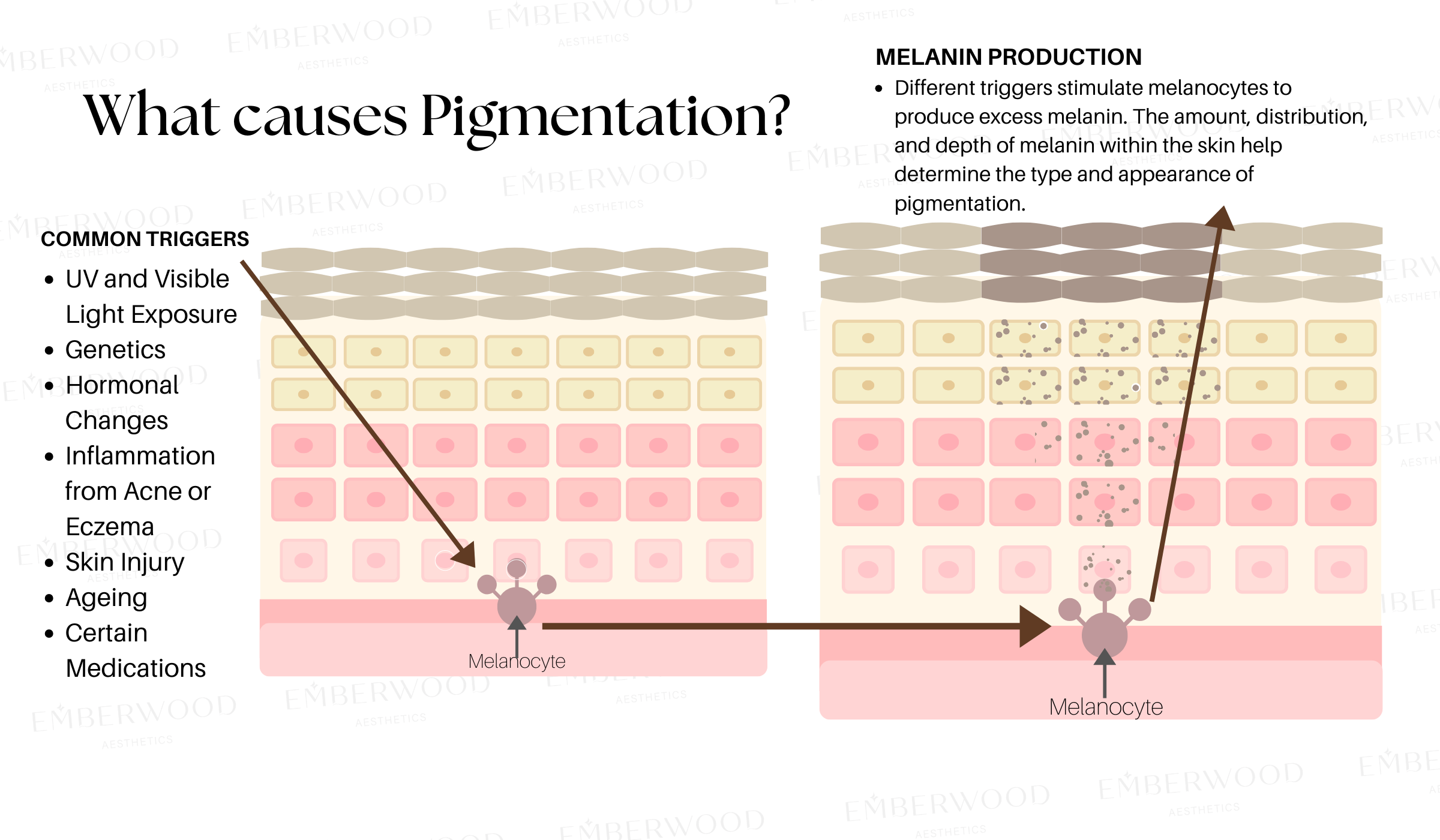
Pigmentation develops when the skin produces or stores too much melanin, the natural pigment responsible for our skin colour.
But melanin doesn't increase randomly. Different triggers activate pigment production in different ways, including:
Ultraviolet (UV) and visible light exposure
Genetics
Hormonal changes
Inflammation from acne or eczema
Skin injury
Ageing
Certain medications
Understanding why the pigment formed helps determine the most effective treatment.
Why Is Pigmentation So Difficult to Treat?
If you've ever treated pigmentation only to see it return a few months later, you're certainly not alone.
Many pigment disorders are chronic conditions, meaning they can be controlled but are influenced by ongoing triggers such as sunlight, heat, hormones and inflammation.
Rather than simply removing existing pigment, successful treatment aims to:
Clear unwanted pigment
Reduce the triggers that stimulate pigment production
Prevent future recurrence
Protect the skin barrier
This is why pigmentation treatment often requires patience and a personalised long-term plan rather than a single "quick fix."
Is Every Brown Spot the Same?
Not at all.
One of the biggest misconceptions is that every brown spot should be treated the same way.
In reality, pigmentation may be:
Superficial or deep
Brown, grey or blue-grey
Caused by excess melanin or blood vessels
Temporary or lifelong
Easy to treat, or much more resistant
Making the correct diagnosis is often the most important part of treatment.
Common Types of Pigmentation
Pigmentation is not a single condition. Different types of pigmentation vary in colour, depth within the skin, underlying cause and response to treatment.
Some pigment disorders develop primarily from sun exposure, while others are influenced by hormones, genetics or inflammation. Certain forms of pigmentation sit within the superficial layers of the skin and generally respond well to treatment, whereas others lie deeper within the dermis and often require multiple treatment sessions.
-
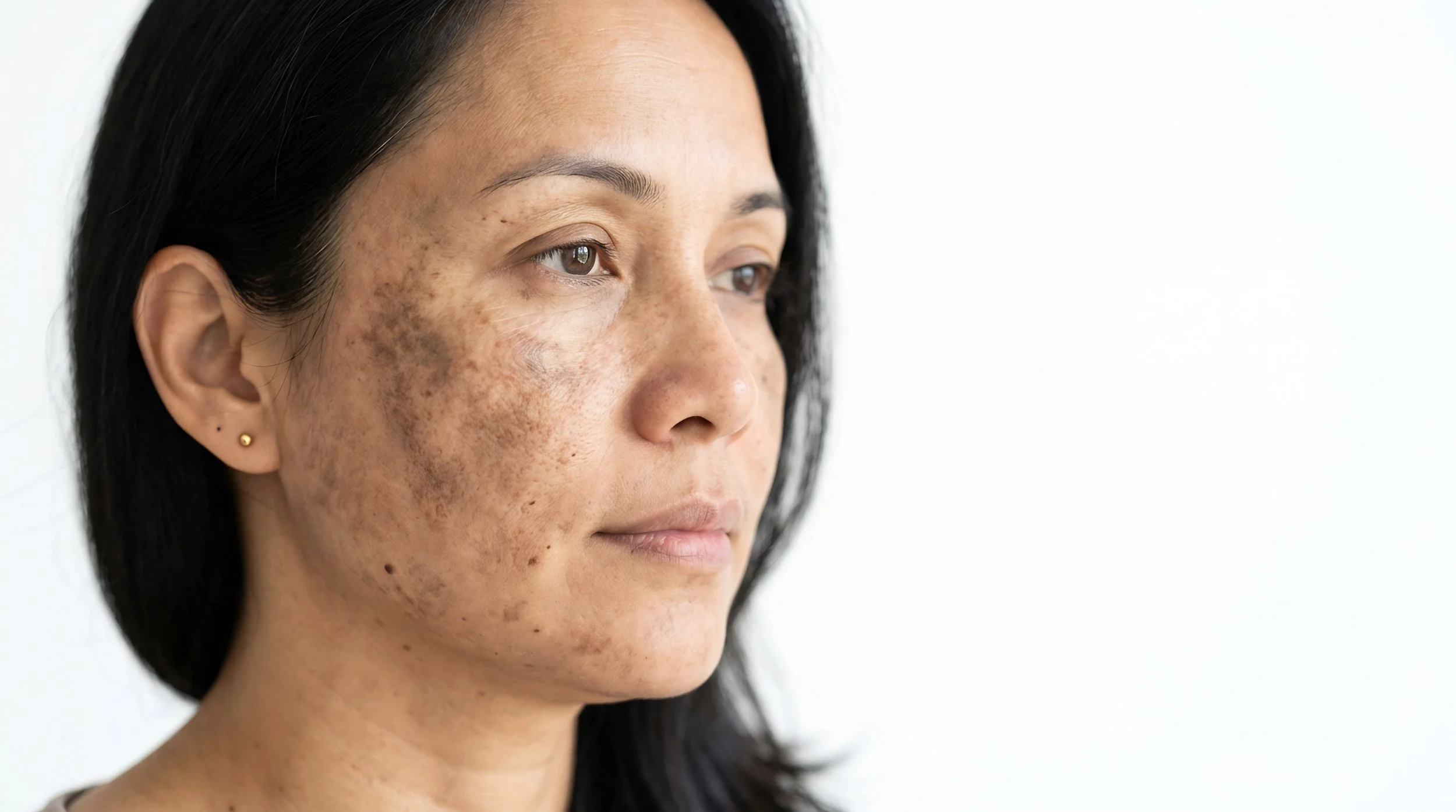
Melasma is one of the most complex, and frustrating, pigmentation conditions.
It typically appears as symmetrical brown or grey-brown patches across the cheeks, forehead, upper lip or jawline.
Unlike freckles, melasma isn't simply "pigment sitting on the surface."
Research now shows that melasma is a chronic condition involving several interconnected pathways, including:
Excess melanin production
Increased blood vessels within the skin
Chronic inflammation
Hormonal influences
UV and visible light exposure
Skin barrier dysfunction
This explains why melasma often recurs after holidays, heat exposure or even overly aggressive treatments.
Because several pathways are involved, melasma usually responds best to a combination of treatments rather than laser therapy alone.
-
Freckles (ephelides) are among the most recognisable forms of pigmentation.
They are small, well-defined brown spots that become darker after sun exposure because melanocytes temporarily produce more melanin.
Unlike melasma, the number of pigment-producing cells is usually normal, they're simply more active.
Freckles often:
Become darker in sunny weather
Fade during periods of reduced UV exposure
Respond well to pigment-targeting laser treatment
Since freckles usually sit within the superficial layers of the skin, they are generally easier to treat than deeper pigment disorders.
-
Hori's naevus is a particularly common condition in Asian skin.
Instead of appearing as light brown freckles, it presents as blue-grey or brown-grey patches over the cheekbones, temples and around the eyes.
The reason it's more stubborn is simple: the pigment sits much deeper within the dermis.
Because of this, treatment usually requires multiple sessions and gradual improvement rather than a single treatment.
Can Pigmented Birthmarks Be Treated?
Some pigmented birthmarks are present from birth, while others gradually develop later in life.
These include conditions such as:
Café-au-lait spots
Naevus of Ota
Hori's naevus
Becker's naevus
Selected congenital pigmented lesions
Treatment depends on how deep the pigment sits within the skin, and some birthmarks respond better than others to laser treatment.
Why Do Acne Marks Look Different?
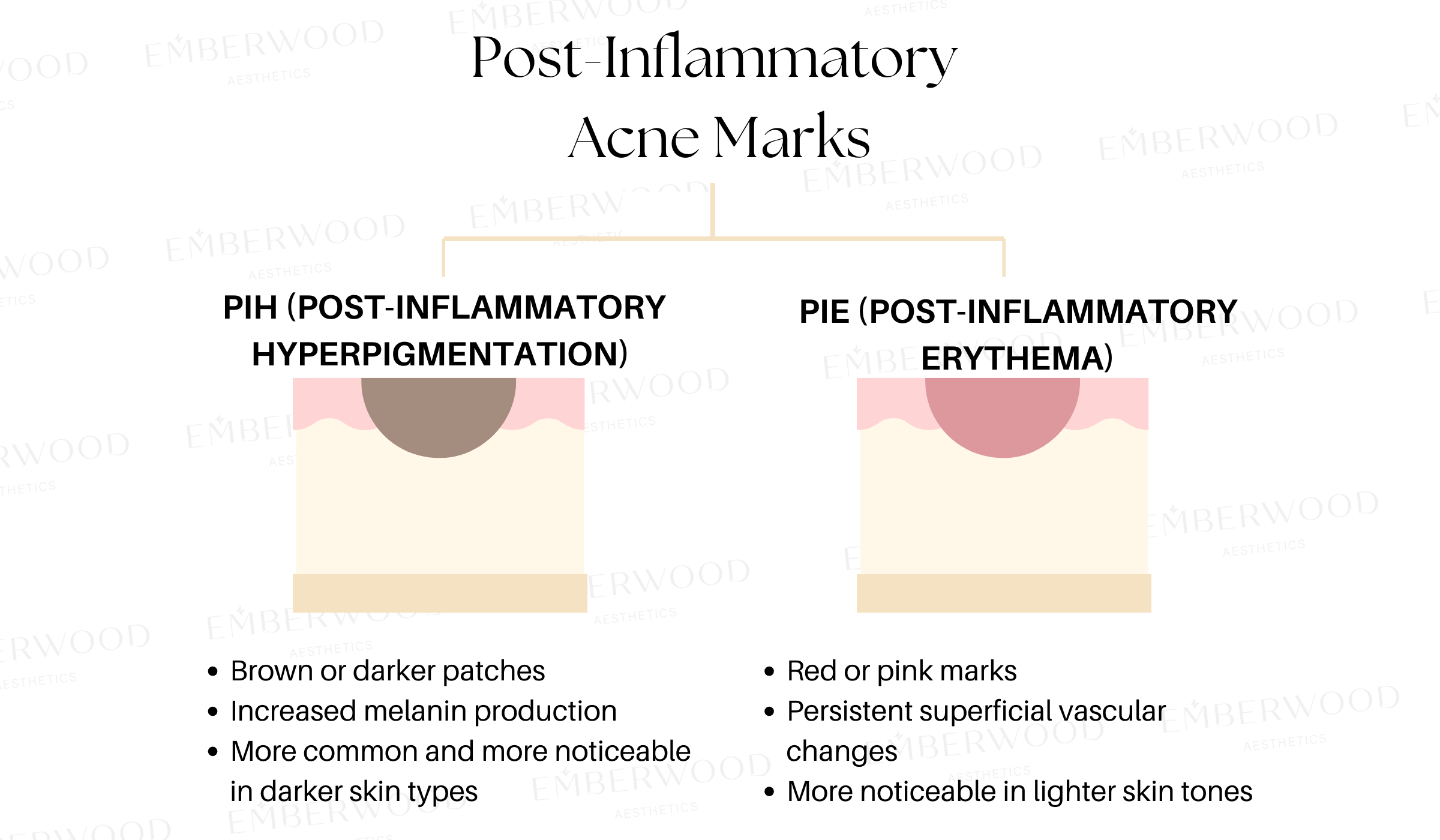
Acne marks that remain after inflammation generally fall into two categories:
Post-inflammatory hyperpigmentation (PIH), which appears as brown or darker patches caused by excess melanin.
Post-inflammatory erythema (PIE), which appears as red or pink marks caused by persistent superficial vascular changes.
Although they may look similar, they develop through different biological processes and require different treatment approaches.
Why Do Acne Marks Turn Brown?
Brown acne marks are known as post-inflammatory hyperpigmentation (PIH).
Whenever the skin becomes inflamed, whether from acne, eczema, insect bites or injury, it can stimulate melanocytes to produce extra melanin during healing. This excess pigment remains behind long after the original inflammation has settled.
PIH is more common and often more noticeable in individuals with darker skin types, including many Asian skin types, because melanocytes are more likely to produce excess melanin in response to inflammation.
Treatment focuses on both fading the pigmentation and preventing ongoing inflammation.
Why Are Some Acne Marks Red Instead?
Not every acne mark is pigmentation.
Some are actually post-inflammatory erythema (PIE), persistent redness caused by tiny superficial blood vessels that remain dilated after inflammation.
Because PIE is caused by blood vessels rather than excess melanin, treatments that target pigmentation are not necessarily effective for red acne marks. Correct diagnosis is therefore important before treatment begins.
How Do We Diagnose Pigmentation?
No two patients have exactly the same pattern of pigmentation.
During your consultation, your doctor will assess:
The type of pigmentation
Whether the pigment is superficial or deep
Your skin type
Previous treatments
Lifestyle and sun exposure
Hormonal and medical factors
Many patients actually have a combination of melasma, freckles and acne pigmentation occurring simultaneously.
Correct diagnosis allows treatment to be tailored to your skin rather than using a one-size-fits-all approach.
How Do We Treat Pigmentation?
Do Topical Medications Really Work for Pigmentation?
Yes, however it is multifactorial and topical medications work best as part of a comprehensive treatment plan rather than on their own.
While lasers can break down existing pigment, medical-grade topical medications help prevent new pigment from forming, reduce melanin production and lower the risk of recurrence. This is particularly important for chronic conditions such as melasma.
Depending on your skin type and diagnosis, your doctor may recommend one or more of the following:
Hydroquinone – the gold standard pigment suppressor that reduces melanin production.
Retinoids (such as tretinoin) – increase skin cell turnover and improve penetration of other pigment-fighting ingredients.
Azelaic acid – helps reduce pigmentation while also treating acne and rosacea.
Cysteamine cream – an increasingly popular option for melasma and post-inflammatory hyperpigmentation.
Kojic acid – inhibits tyrosinase, an enzyme involved in melanin production.
Niacinamide – reduces the transfer of pigment to skin cells while supporting the skin barrier.
Vitamin C – provides antioxidant protection while helping to brighten the skin.
Tranexamic acid (topical) – helps suppress pigment pathways involved in melasma.
The most suitable treatment depends on your diagnosis, skin sensitivity and medical history.
How Does a 755nm Alexandrite Picosecond Laser Treat Pigmentation?
A 755nm Alexandrite picosecond laser delivers ultra-short pulses of energy that break pigment into tiny particles, allowing your body's immune system to gradually remove them.
Because the energy is delivered in picoseconds (one trillionth of a second), the laser can fragment pigment while minimising heat transfer to the surrounding skin. This may reduce the risk of unwanted thermal injury compared with traditional nanosecond lasers.
Depending on the type of pigmentation, a 755nm Alexandrite picosecond laser may be used to treat:
Freckles
Sun spots (solar lentigines)
Hori's naevus
Selected pigmented birthmarks
Post-inflammatory hyperpigmentation (PIH)
For carefully selected patients with melasma, conservative low-energy treatment protocols may be incorporated into a broader treatment plan alongside medical-grade skincare and strict sun protection.
The number of treatments required varies depending on the depth and type of pigmentation.
Personalised Pigmentation Treatment
At Emberwood Aesthetics, Dr Jolenda develops personalised pigmentation treatment plans based on the specific type of pigmentation, its depth within the skin, your skin type, lifestyle factors and individual treatment goals. Rather than relying on a single treatment, management often involves a carefully selected combination of medical-grade skincare, laser treatments and long-term maintenance strategies tailored to your diagnosis.
If you are unsure what type of pigmentation you have or which treatment may be most appropriate, schedule a consultation with Dr Jolenda for a personalised assessment and treatment plan.
Frequently Asked Questions
about Pigmentation and Treatments for Pigmentation
-
It depends on the type of pigmentation. Freckles and certain sun spots may improve significantly or even clear after treatment. However, chronic conditions such as melasma can recur because the underlying triggers, such as sunlight, hormones and inflammation, remain present. Long-term maintenance is often necessary.
-
Pigmentation often returns because the underlying trigger has not been fully controlled. Sun exposure, heat, hormonal changes, inflammation and genetics can all stimulate melanocytes to produce new pigment. Successful treatment focuses on both removing existing pigmentation and preventing recurrence.
-
Although both appear brown, they are very different conditions.
Freckles are usually small, well-defined spots caused by increased melanin production after UV exposure and generally respond well to Picosure Pro laser treatment.
Melasma is a chronic pigment disorder involving excess melanin, inflammation, blood vessels, hormonal influences and skin barrier dysfunction. It usually requires combination therapy rather than laser treatment alone.
-
No. Brown spots may be caused by freckles, sun spots, post-inflammatory hyperpigmentation, Hori's naevus, birthmarks or other pigmentary disorders. An accurate diagnosis is essential because each condition responds differently to treatment.
-
Yes. Brown acne marks (post-inflammatory hyperpigmentation or PIH) often respond to topical medications, Picosure Pro pigment lasers and sun protection.
Red acne marks (post-inflammatory erythema or PIE) are caused by persistent blood vessels rather than excess pigment and may respond better to vascular DermaV laser treatment.
-
There is no single "best" laser for every type of pigmentation.
The ideal laser depends on whether the pigment is superficial or deep, whether there is an associated vascular component, your skin type and your diagnosis.
A 755nm Alexandrite picosecond laser is an effective option for many pigmentary conditions, including freckles, Hori's naevus and selected cases of post-inflammatory hyperpigmentation.
-
This depends on the type of pigmentation being treated.
Superficial freckles may improve after one or two treatments, while deeper pigmentation such as Hori's naevus often requires multiple sessions. Melasma is usually managed with ongoing maintenance rather than a fixed number of treatments.
-
Yes. When performed by an experienced medical practitioner using appropriate laser settings and treatment protocols, pigmentation treatment can be safely performed in Asian skin.
Because Asian skin is more prone to post-inflammatory hyperpigmentation, conservative treatment parameters and careful aftercare are especially important.
-
Yes. Daily sun protection is one of the most effective ways to reduce pigmentation recurrence.
Ultraviolet (UV) radiation, visible light and heat can all stimulate pigment production, particularly in patients with melasma. Wearing broad-spectrum sunscreen every day, even on cloudy days, helps protect treatment results.
Increasingly, oral sunblock including Heliocare has gained increasing prominence.
-
Yes, particularly when prescribed appropriately.
Medical-grade topical medications help reduce melanin production, improve skin turnover and lower the risk of recurrence. They are often used together with laser treatment to achieve better and longer-lasting results.
-
Earlier treatment is often beneficial because some pigmentary conditions become more established over time.
Seeking treatment early may allow for a more tailored management plan and help reduce progression, particularly for chronic conditions such as melasma. An accurate diagnosis also ensures that the most appropriate treatment is selected from the outset.
Contact Us
Your journey toward refined beauty starts with a conversation.
Share your aspirations with us, and our specialists will reach out to curate your personal consultation