
Laser Hair Removal in Singapore with Derma V
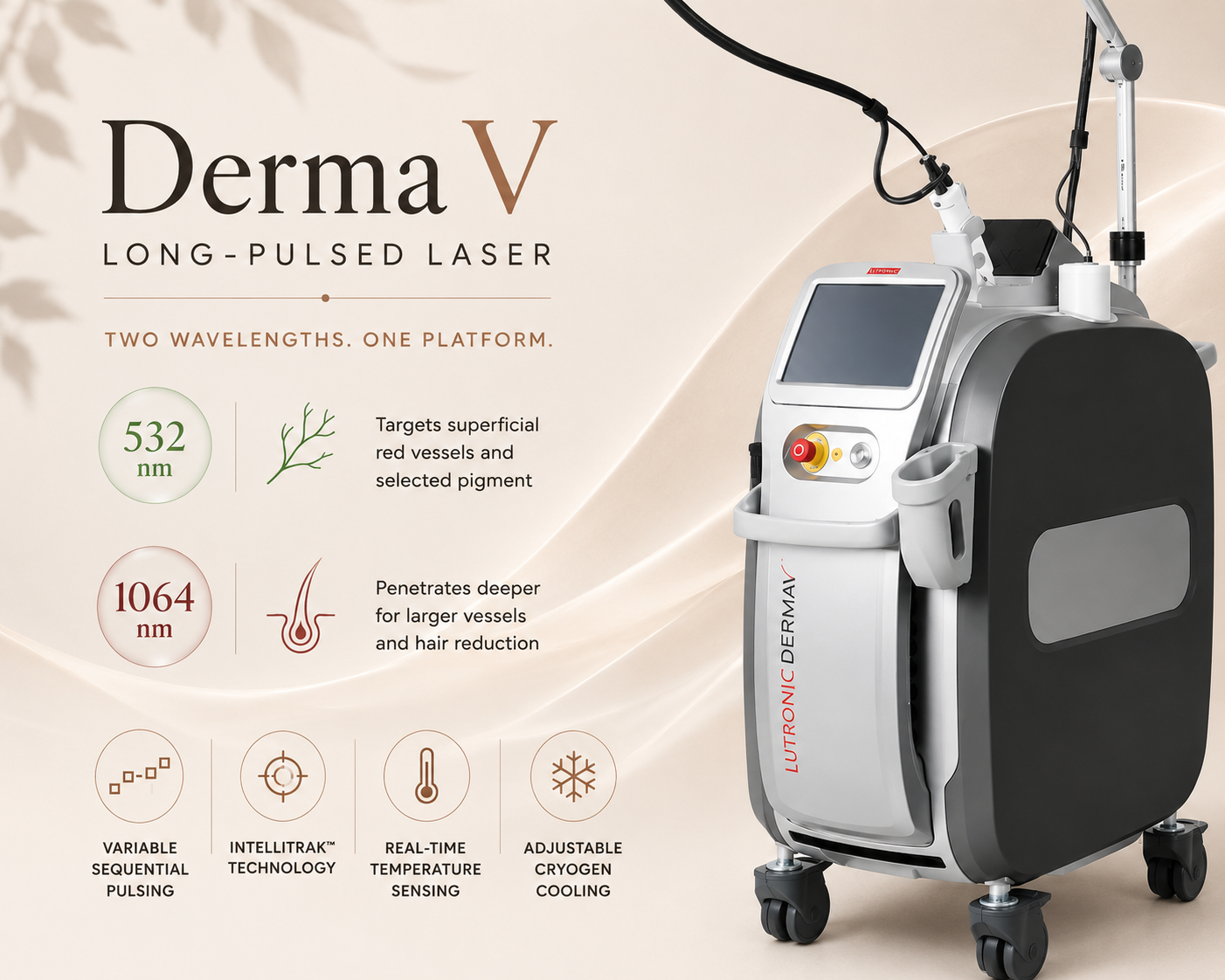
Derma V Laser
Looking to reduce unwanted hair on your upper lip, underarms, bikini line or beard area? At Emberwood Aesthetics, we use the Derma V long-pulsed laser for hair reduction, with treatment planned around your skin tone, hair characteristics and goals.
Laser hair removal aims to reduce the amount of hair that grows back over time. A course of treatment is usually needed, and maintenance sessions may be appropriate. The goal is long-term hair reduction rather than a promise that every hair will disappear permanently.
Visit Emberwood Aesthetics at Wheelock Place, Orchard Road, for an assessment of your unwanted hair and treatment options.
How does Derma V laser hair removal work?
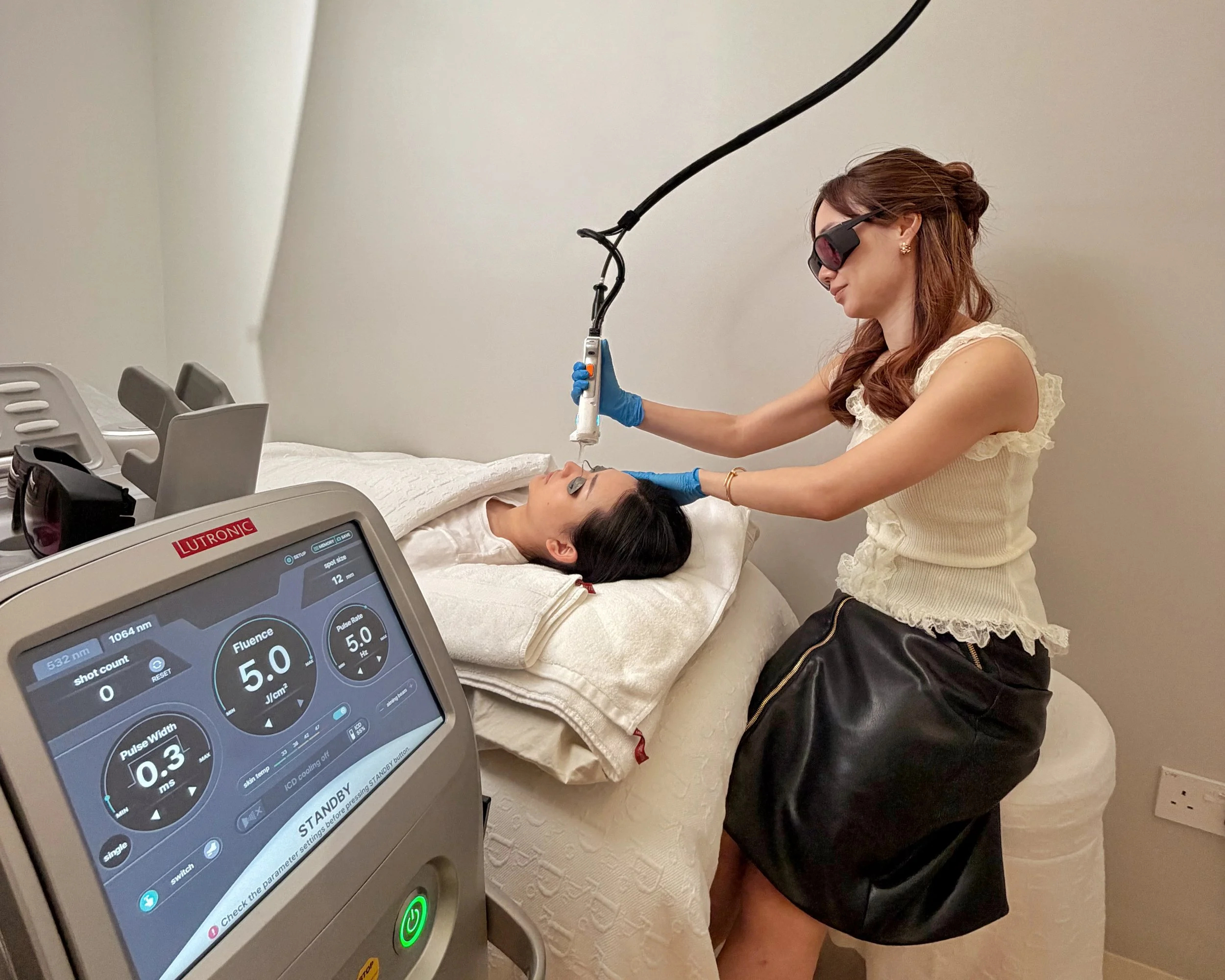
Derma V is a dual-wavelength laser platform. For hair reduction, we use its long-pulsed 1064 nm Nd:YAG wavelength. Laser energy is absorbed by pigment in the hair and converted into heat, which damages the follicle’s ability to produce hair. Cooling helps protect the skin during treatment.
Hair grows in cycles. Follicles are most responsive during the active growth phase, and not all follicles reach that phase together. This is why treatment is spaced across several appointments.
How many laser hair removal sessions will I need?
The following ranges are a starting guide for discussion with your doctor. They are not guaranteed totals; your course may be shorter or longer depending on response.
Area
Indicative initial course
Typical starting interval
Upper lip 6–10 sessions 4–6 weeks
Underarms 6–8 sessions 6–8 weeks
Bikini line 6–8 sessions 6–8 weeks
Beard or neck 6–8 more sessions 4–6 weeks
Intervals may lengthen as regrowth slows. Maintenance is based on meaningful regrowth, rather than an automatic monthly appointment. General patient guidance describes multiple treatments several weeks apart; these area-specific ranges are clinical planning estimates, not a universal protocol.
Is laser hair removal suitable for dark hair and darker skin?
Does it work on dark, thick hair?
Yes. Brown or black hair generally provides a better target than hair with little pigment. Coarse hair often responds more predictably than fine hair. Blonde, grey, white and many red hairs respond poorly.
Can people with darker skin have laser hair removal?
Long-pulsed 1064 nm Nd:YAG is commonly selected for darker skin because its wavelength is less strongly absorbed by surface melanin than shorter hair-removal wavelengths. This can offer a useful safety margin when appropriate settings and cooling are used Darker skin still requires careful treatment. Your doctor should assess your actual skin tone, recent tanning, hair thickness and previous reactions
Doctor-performed laser hair removal vs diode and IPL
How is Derma V different from diode laser hair removal?
Derma V uses a long-pulsed 1064 nm Nd:YAG wavelength for hair reduction. Many diode systems use wavelengths around 800–810 nm, although devices vary. Both are genuine laser technologies capable of reducing pigmented hair.
Nd:YAG is often selected for darker skin; diode can also be effective in appropriately selected patients. The best choice depends on skin tone, hair thickness, device specifications, settings, cooling and operator experience. Your doctor can explain the reasons for selecting a particular device for you.
How is laser hair removal different from IPL?
IPL means intense pulsed light. It uses a filtered range of wavelengths rather than a laser’s specific wavelength. Both can reduce hair, but results and suitability vary between devices and patients. For darker skin, long-pulsed Nd:YAG is often preferred because of its absorption characteristics.
Laser hair removal vs waxing and shaving
Method
What it does
Main considerations
Laser
Targets follicles to reduce future growth
Several sessions; possible irritation, burns or pigment changes
Waxing
Pulls hair from the root temporarily
Pain, skin lifting, follicle irritation and ingrown hairs can occur
Shaving
Cuts hair at the skin surface temporarily
Frequent upkeep; cuts, razor burn and ingrown hairs can occur
Waxing and shaving are reasonable options for many people, but repeated mechanical irritation can be troublesome for sensitive skin. Laser reduction may reduce how often you need these methods. It has its own risks and is not guaranteed to prevent every ingrown hair.
Beard laser hair removal for men
Beard treatment can be tailored to different grooming goals: reducing neck hair, tidying the cheek or beard boundary, or reducing overall density. You do not need to choose full beard removal to discuss treatment.
Men with curly or coarse facial hair may develop razor bumps when cut hairs re-enter the skin. This is called pseudofolliculitis barbae. Reducing the responsible hairs can help manage recurring bumps, although existing inflammation or dark marks may need separate care.
Your intended beard shape should be agreed before treatment. Reduction can be lasting, and uneven or patchy regrowth can occur. Consider future grooming preferences before treating areas where you may later want a fuller beard.
What affects laser hair removal results and regrowth?
Hair colour, thickness and treatment area
The amount of pigment and the size of the hair affect its response. Fine, lightly pigmented hair is harder to target. Facial and body hair also have different growth patterns, so your upper lip and underarms may need different schedules.
Hormones and underlying conditions
Hormonal influences can encourage new terminal hair growth. Conditions such as polycystic ovary syndrome (PCOS), some medicines and changing androgen levels can affect long-term maintenance needs. Laser targets hair; it does not correct an underlying hormonal condition
Treatment settings and timing
Energy, pulse duration, coverage and cooling affect the balance between follicle treatment and skin protection. Higher settings are not automatically better. Appointments should follow the area’s regrowth pattern; treating too frequently does not make every follicle responsive sooner.
Tanning and hair removal between sessions
Recent tanning can alter treatment suitability. Waxing, threading or plucking removes the hair that the laser needs to target. Follow your preparation instructions and use the advised method of managing regrowth between visits.
How to prepare and care for your skin
Before treatment, avoid tanning and protect exposed skin with broad-spectrum SPF 30 or higher. Stop waxing, threading and plucking for at least four weeks, or as advised. Usually, shave the area the day before your appointment. Please do inform Dr Jolenda about medicines, skin conditions and any recent reaction or treatment.
During treatment, protective eyewear is required. Afterwards, temporary redness, warmth or swelling around follicles may occur. Use gentle skin care and follow the clinic’s advice about cooling and sun protection. Contact the clinic if you develop blistering, increasing pain or a worsening skin reactio
“”

Frequently Asked Questions
about Hair Removal Treatment
-
It can produce lasting reduction, but complete lifelong removal is not guaranteed. Some hair may regrow and maintenance may be needed.
-
An indicative starting course is 6–10 sessions, initially around 4–6 weeks apart. Fine hair or ongoing hormonal growth may change the recommendation.
-
An indicative starting course is 6–8 sessions, often around 6–8 weeks apart. Your doctor will adjust the course according to regrowth and skin response.
-
It may feel like brief hot pinpricks or snapping against the skin. Sensitivity varies by area and hair density. Cooling helps, but treatment is not necessarily painless.
-
-
Some follicles were not in the responsive growth phase, while others may recover. Hormones can also encourage new growth. Regrowth does not always mean the course has been ineffective.
-
Reducing the responsible hairs can reduce recurrence. Persistent or painful bumps need assessment to establish their cause.
-
It may be. Long-pulsed Nd:YAG Derma V Laser is often selected for darker skin. Individual skin and hair characteristics determine suitability.
-
You can discuss selected boundaries or density reduction. Perfectly even thinning is not guaranteed, and reduction may be lasting. Agree the intended pattern carefully before starting.
-
Fees depend on the area, coverage and treatment course. Contact Emberwood Aesthetics for a personalised quote, including session and maintenance costs.
Discuss laser hair reduction at Emberwood Aesthetics
.Whether your concern is upper lip hair, underarm shaving, bikini-line irritation or beard grooming, start with an assessment of your skin and hair. Dr Jolenda will discuss whether Derma V hair reduction is appropriate and explain the likely course, limitations and aftercare.