Rosacea Treatment in Singapore
Derma V Laser, Creams, and Medication
Rosacea is more than simply having rosy cheeks. It is a chronic inflammatory skin condition that may cause persistent facial redness, frequent flushing, visible blood vessels, burning or stinging, and acne-like bumps. Some people experience mainly redness, while others have a mixture of redness, sensitivity and inflammatory breakouts.
At Emberwood Aesthetics, rosacea treatment is doctor-led and planned according to the features visible on your skin. Dr Jolenda Ang may recommend a combination of Derma V vascular laser, prescription creams, oral medication, gentle skincare and trigger management rather than relying on one treatment for every form of rosacea.
Book a consultation for a personalised rosacea and facial redness assessment.
What Does Rosacea Look and Feel Like?
Rosacea commonly affects the cheeks, nose, chin and central forehead. Features may include:
Persistent facial redness that does not fully settle
Flushing triggered by heat, exercise, alcohol, spicy food, stress or temperature changes
Fine visible blood vessels or broken capillaries
Red inflammatory bumps or small pus-filled spots
Burning, stinging, tightness or unusual skin sensitivity
Dry, rough or easily irritated skin
Thickening of the skin, particularly around the nose, in more advanced cases
Dry, gritty, watery, red or irritated eyes in ocular rosacea
Rosacea does not look identical in every patient. Current treatment planning focuses on the features causing the most difficulty, such as persistent redness, visible vessels or papules and pustules, so that each concern can be treated appropriately.
Is It Rosacea, Acne or Sensitive Skin?
Rosacea can be mistaken for acne because both conditions may cause red bumps and pustules. However, rosacea usually affects the central face and is often accompanied by flushing, background redness, visible vessels or burning. Blackheads and whiteheads, known as comedones, suggest acne rather than rosacea, although both conditions can occur together.
Other conditions such as perioral dermatitis, seborrhoeic dermatitis, contact dermatitis, steroid-induced rosacea and certain autoimmune rashes may also resemble rosacea. A correct diagnosis matters because aggressive acne products, scrubs or inappropriate steroid creams can make rosacea-prone skin more inflamed.
What Is the Best Treatment for Rosacea?
There is no single “best” rosacea treatment because different treatments address different features:
Persistent redness and visible vessels: vascular laser, sometimes combined with a prescription redness-reducing cream
Inflammatory bumps and pustules: topical ivermectin, azelaic acid, metronidazole or an appropriate oral antibiotic
Frequent flushing: trigger management, skincare and selected prescription treatment; vascular laser may help the persistent background redness
Dryness, burning and sensitivity: barrier-repair skincare and removal of irritating products
Eye symptoms: eyelid care and medical or ophthalmic assessment where needed
Thickened or phymatous skin: early medical control and, for established tissue overgrowth, assessment for procedural treatment
Many patients need combination treatment because a cream that controls bumps may not remove visible vessels, while a vascular laser that reduces redness does not replace medication for active inflammatory rosacea.
What Rosacea Concerns Can Derma V Help?
Derma V may be considered for:
Persistent background facial redness
Fine facial telangiectasia or broken capillaries
Redness across the cheeks, nose or chin
More prominent vessels around the nose
A mixture of diffuse redness and individual visible vessels
Residual redness that remains after inflammatory bumps are medically controlled
Derma V does not “cure” rosacea or prevent every future flush. It treats the vascular component that is present at the time. Because rosacea is a chronic condition, new vessels or redness may gradually develop and maintenance treatment may occasionally be useful.
What Happens During Derma V Rosacea Treatment?
Before treatment, Dr Jolenda will assess your baseline redness, visible vessels, skin tone, recent sun exposure, sensitivity and any active dermatitis or inflammatory flare.
During treatment:
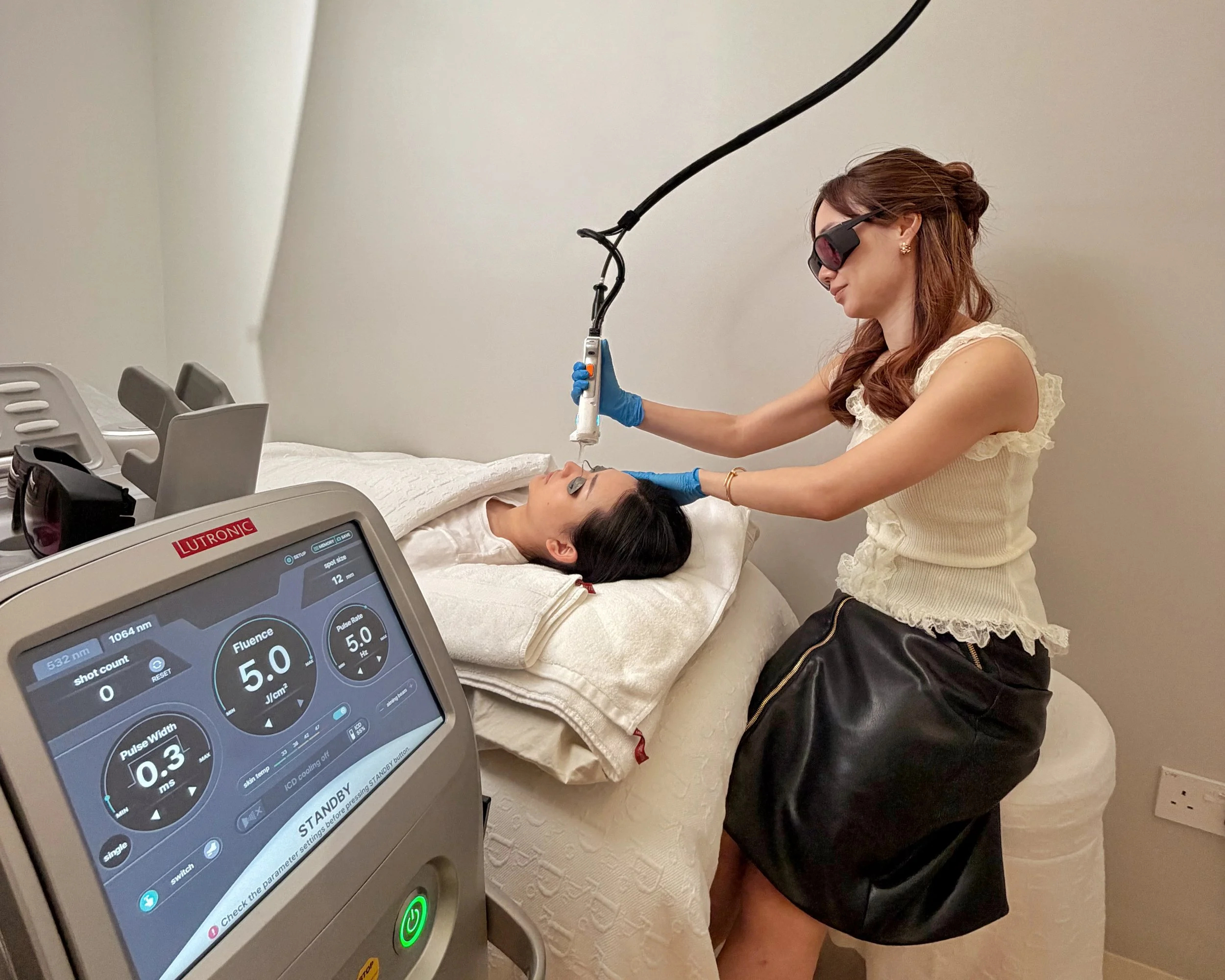
Your eyes will be protected with appropriate laser eyewear.
The laser settings will be selected for diffuse redness, individual vessels or a combination of both.
You may feel brief warmth, prickling or a snapping sensation.
Cooling is delivered to improve comfort and protect the skin surface.
A session commonly takes around 10 to 30 minutes, depending on the size of the area and whether individual vessels need detailed treatment.
Some patients notice improvement after one treatment, while others benefit from a course of sessions. The number and spacing depend on the severity of redness, vessel size, skin response and treatment goals. Results develop gradually and should be reviewed after the post-laser redness has settled.
Which Prescription Creams Can Be Used for Rosacea?
Prescription treatment is selected according to whether your main problem is inflammatory bumps, persistent redness or both. The medications below are discussed for education and require an individual medical assessment.
-
Topical ivermectin has anti-inflammatory and antiparasitic activity and is commonly used for inflammatory papules and pustules in rosacea. It may be particularly useful where inflammation associated with increased Demodex mite activity is suspected.
It does not directly remove established visible blood vessels. Patients with both bumps and vascular redness may therefore benefit from topical ivermectin together with a vascular laser plan once the skin is suitably controlled.
-
Azelaic acid can reduce inflammatory bumps and may also help some background redness. However, it can sting or burn when first introduced, especially if the skin barrier is already irritated. Strength, formulation and frequency should be adjusted to skin tolerance rather than increased aggressively.
-
Topical metronidazole is an established anti-inflammatory option for rosacea papules and pustules. It is available in different formulations, and some patients find it gentler than more acidic or exfoliating treatments.
-
Topical brimonidine or oxymetazoline may temporarily reduce persistent facial redness by constricting superficial blood vessels. They do not permanently remove the vessels and are not suitable for everyone. Some patients can experience rebound or worsening redness, so an initial cautious trial may be advised.
-
A simple moisturiser containing ingredients such as ceramides, glycerin or other barrier-supporting agents is often an important part of rosacea care. Reducing dryness and irritation can improve tolerance of prescription creams and make the skin less reactive.
-
Topical steroid creams are generally not a routine long-term treatment for rosacea. Repeated facial steroid use can trigger or worsen rosacea-like redness, visible vessels and bumps.
However if you have been applying a steroid to your face, do not change a prescribed treatment abruptly and book a consultation first.
-
Oral antibiotics are mainly used for moderate to severe inflammatory rosacea with numerous papules or pustules, or when topical treatment alone has not provided adequate control. They are not usually prescribed simply to remove visible vessels.
Doxycycline is the most frequently used oral option. In selected patients, a low or modified-release dose is prescribed primarily for its anti-inflammatory effect rather than to treat a bacterial infection. A conventional antimicrobial course may be used when clinically appropriate.
The doctor will consider:
Severity and extent of inflammatory lesions
Previous treatment response
Pregnancy or breastfeeding status
Medication allergies and interactions
Risk of sun sensitivity, stomach upset or oesophageal irritation
The shortest suitable treatment duration and an appropriate maintenance plan
Other tetracycline-class antibiotics or alternatives may occasionally be considered when doxycycline is unsuitable. Antibiotics should not be started, shared or continued indefinitely without medical review.
-
Low-dose oral isotretinoin may be considered by an appropriately trained doctor for severe, recurrent or treatment-resistant rosacea. It requires medical monitoring and strict pregnancy prevention because of its significant risks. It is not a first-line treatment for ordinary facial redness or mild rosacea.
Patients with prominent flushing may occasionally need assessment for other contributing factors or carefully selected medication. Treatment should be individualised because flushing can have causes beyond rosacea.
Which Skincare Is Best for Rosacea-Prone Skin?
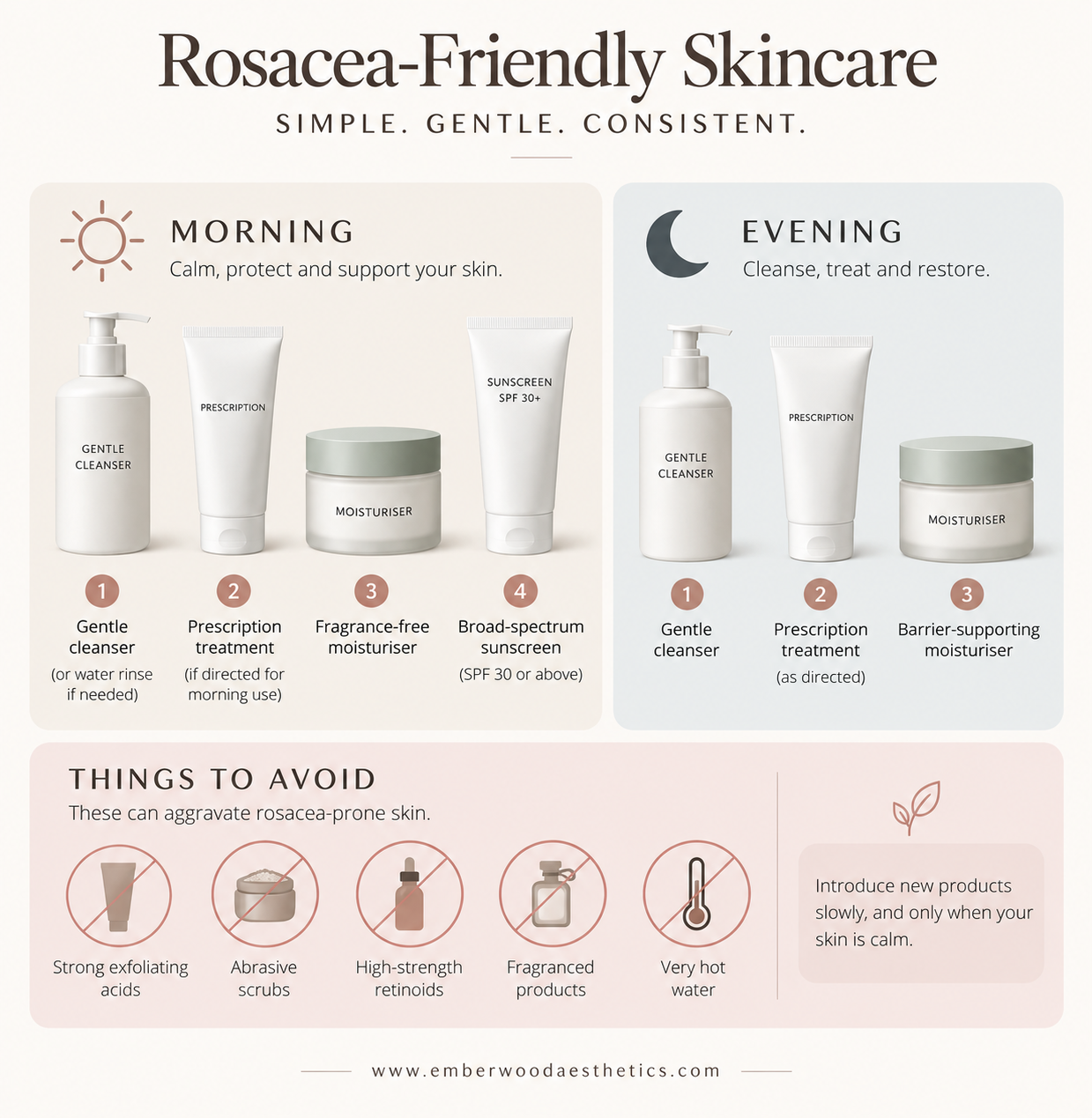
A complicated routine is rarely necessary. A rosacea-friendly routine may include:
Morning
Gentle, non-foaming cleanser or a water rinse if cleansing is irritating
Prescription rosacea cream, if directed for morning use
Fragrance-free moisturiser
Broad-spectrum sunscreen, ideally SPF 30 or above
Evening
Gentle cleanser
Prescription treatment according to the doctor's instructions
Barrier-supporting moisturiser
Avoid introducing several active ingredients at once. Strong exfoliating acids, abrasive scrubs, high-strength retinoids, fragranced products and very hot water commonly aggravate sensitive rosacea skin. Products may be reintroduced slowly once inflammation and barrier irritation are controlled.
What Commonly Triggers Rosacea Flares?
Triggers vary from person to person. Common examples include:
Sun exposure
Hot weather, warm rooms or sudden temperature changes
Hot baths, saunas and steam rooms
Spicy food and hot drinks
Alcohol
Vigorous exercise
Emotional stress
Fragranced or irritating skincare
Overuse of acids, retinoids or exfoliating products
Facial steroid use
A simple symptom and trigger diary can be more useful than avoiding every possible trigger. The goal is to identify your own repeated patterns without making daily life unnecessarily restrictive.
Can Rosacea Affect the Eyes?
Yes. Ocular rosacea can cause dry, gritty, burning, watery or bloodshot eyes, eyelid irritation and recurrent styes. These symptoms may occur even when facial rosacea is mild.
Basic care may include warm compresses and eyelid hygiene, but persistent eye symptoms should be medically assessed. Seek urgent eye care for eye pain, marked light sensitivity, reduced vision or significant one-sided redness, as these are not symptoms to manage with facial skincare alone.
“Rosacea is not something we approach with a one-treatment-fits-all mindset. We look at the pattern of redness, vessels, inflammation and sensitivity first, then decide whether prescription treatment, laser, skincare or a combination is appropriate for you.”
Frequently Asked Questions
about Rosacea Treatment
-
Rosacea is a chronic condition and cannot currently be guaranteed to disappear permanently. However, its redness, bumps, sensitivity and flare frequency can often be controlled with a personalised combination of medication, vascular laser, skincare and trigger management.
-
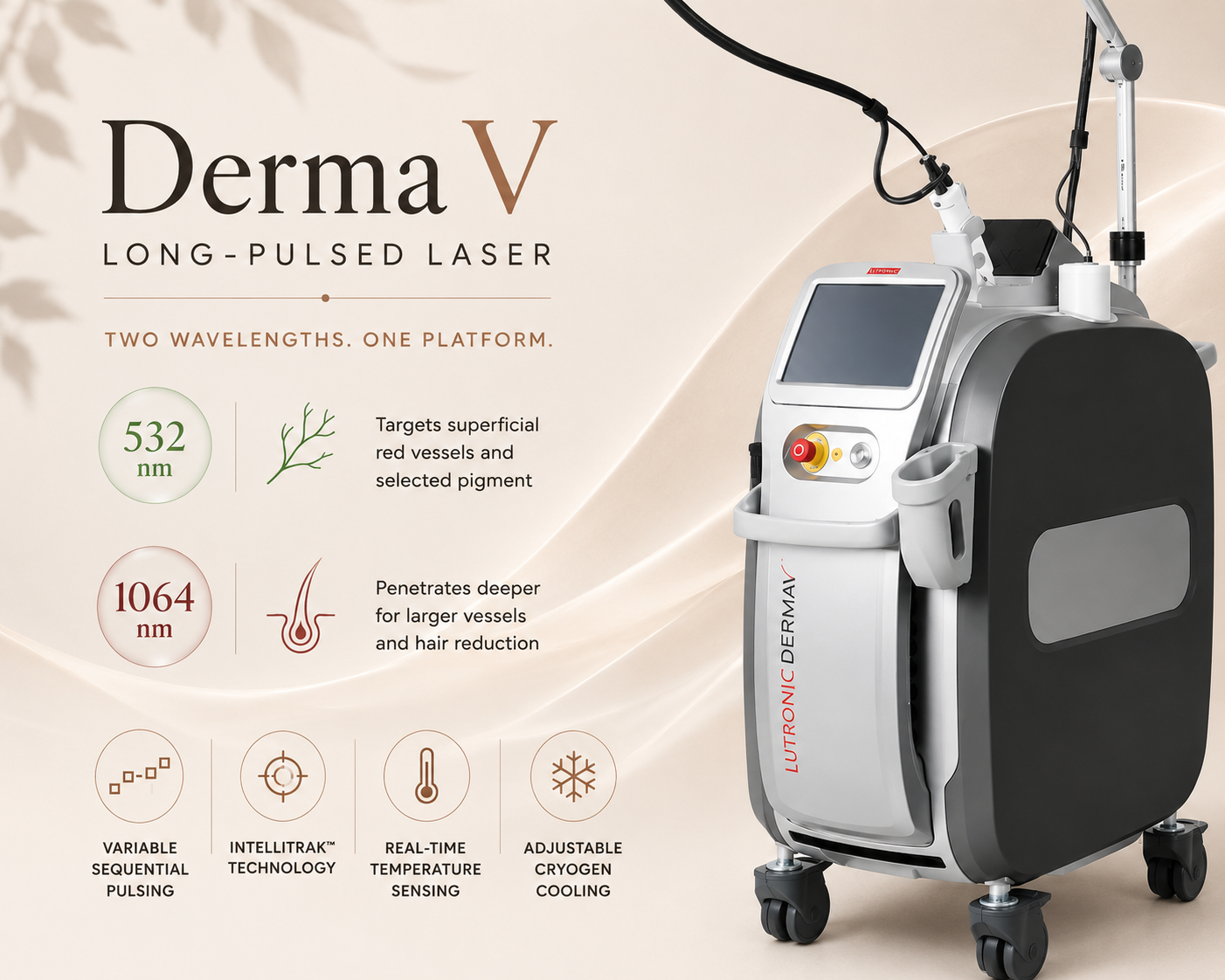
Derma V is designed to target vascular redness using 532 nm and 1064 nm wavelengths and is one option for persistent redness and visible vessels. The most suitable device and settings depend on your skin tone, vessel depth, previous response and whether active dermatitis or inflammatory bumps are present.
-
They treat different components. Vascular laser is particularly useful for persistent redness and visible vessels. Topical or oral medication is generally more useful for inflammatory papules and pustules. Combination treatment may be appropriate when both are present.
-
Some redness or individual vessels may improve after one session, while more extensive rosacea often requires a course. The treatment plan is adjusted according to response rather than promising a fixed number of sessions.
-
Topical ivermectin is an evidence-based prescription option for inflammatory rosacea bumps and pustules. It is less likely to remove established facial vessels, which may need separate vascular treatment.
-
No. Oral antibiotics such as doxycycline can control inflammatory lesions and reduce flares, but they do not permanently cure the condition. A maintenance plan using appropriate topical treatment, skincare and trigger control may be recommended after the oral course.
-
Rosacea-prone skin often has an impaired barrier and reacts more strongly to active ingredients. Azelaic acid can cause temporary stinging, particularly when introduced too frequently or applied to already irritated skin. The doctor may adjust the formulation, frequency or supporting moisturiser.
-
Personalised Rosacea Treatment at Emberwood Aesthetics
Rosacea responds best when the treatment matches the problem in front of us. Dr Jolenda Ang will assess whether your skin needs vascular laser for redness, prescription treatment for inflammatory bumps, barrier repair for sensitivity, or a carefully timed combination.