
By Dr Jolenda Ang | Emberwood Aesthetics, Singapore
Is Ultherapy PRIME painful? How many shots do you actually need? And is it worth the investment?
These are some of the most common questions my patients ask me about Ultherapy PRIME.
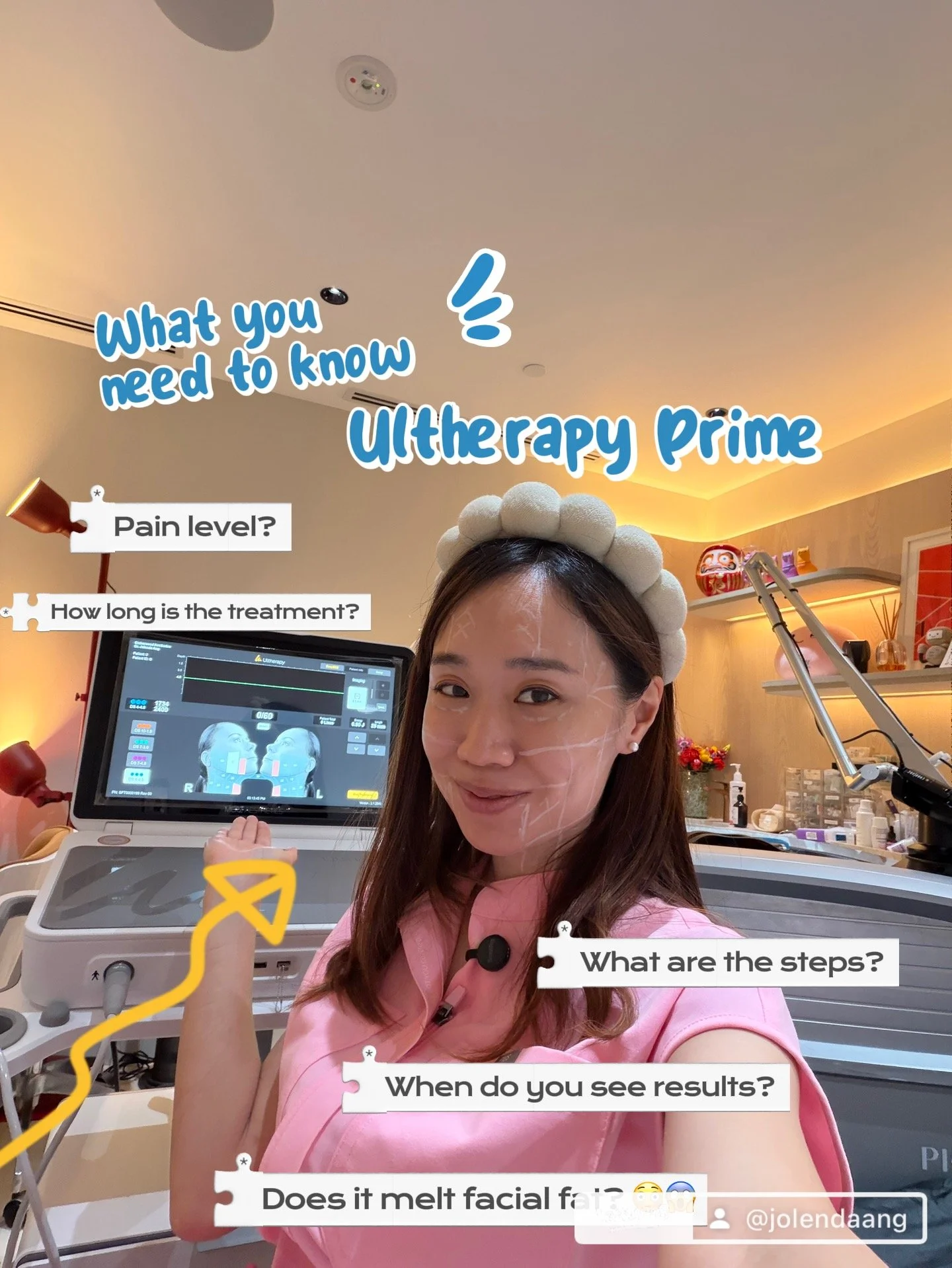
As an aesthetic doctor, I perform Ultherapy PRIME treatments on patients, but I also believe there is value in experiencing the treatments I offer firsthand. After all, understanding what a procedure actually feels like helps me better prepare my patients and manage their expectations.
So, I decided to undergo Ultherapy PRIME myself, and document the entire experience, from numbing and ultrasound imaging to the actual treatment and pain levels.
Here's my personal review, along with some important things I think everyone should know before booking an Ultherapy PRIME treatment in Singapore.
What Is Ultherapy PRIME, and How Does It Work?
Ultherapy PRIME is a non-invasive skin lifting and tightening treatment that uses microfocused ultrasound with real-time visualisation (MFU-V) to deliver focused ultrasound energy beneath the skin.
Unlike lasers, which primarily interact with the skin through light energy, Ultherapy PRIME uses ultrasound energy to create precise thermal coagulation points at selected tissue depths.
These controlled points of heating stimulate a wound-healing response, including collagen remodelling, which can gradually improve skin firmness and lifting over the following months.
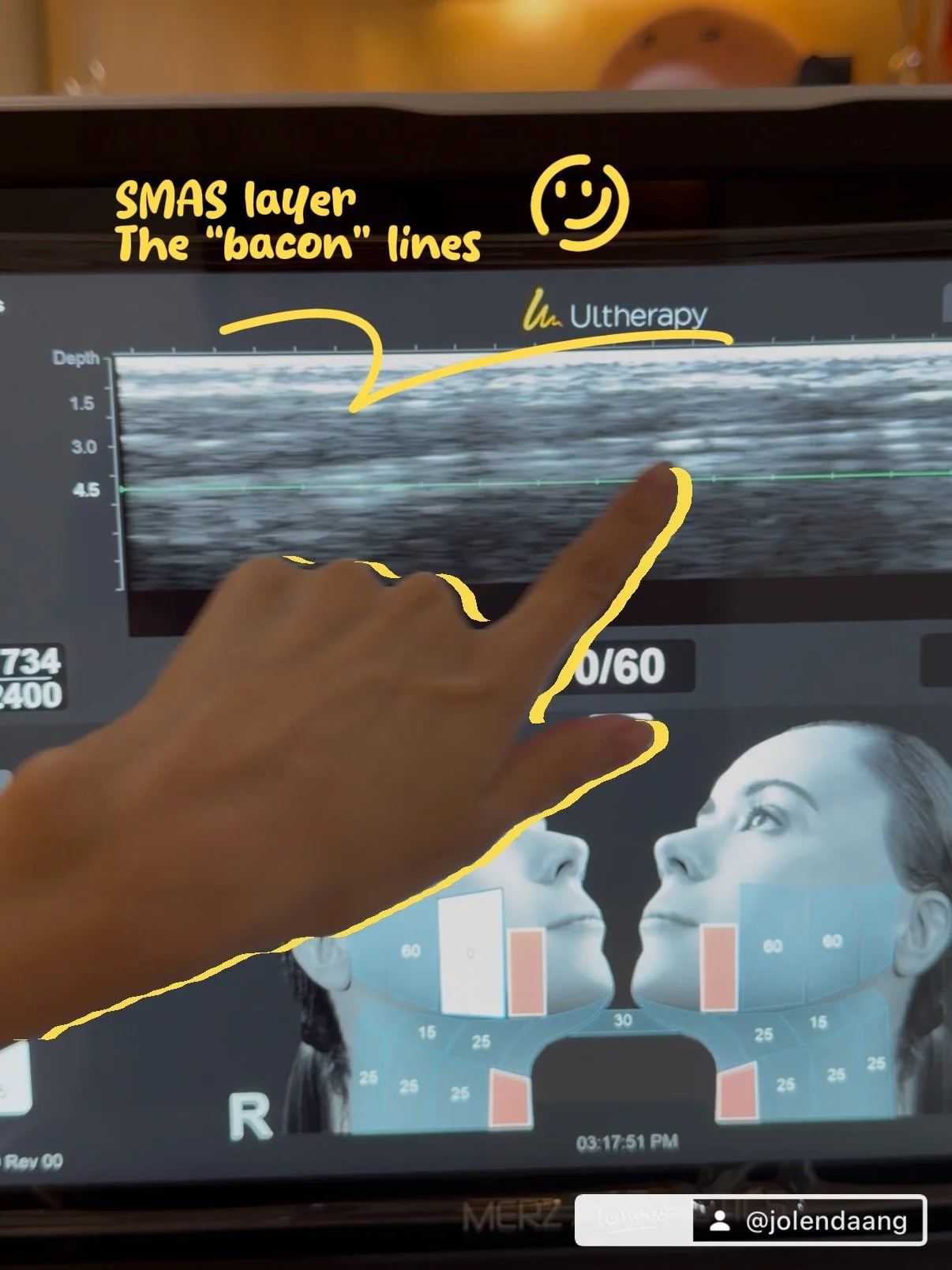
One of the most important features of Ultherapy PRIME is its real-time ultrasound imaging.
This allows the treating doctor to visualise tissue layers beneath the skin and assess the appropriate depth for energy delivery.
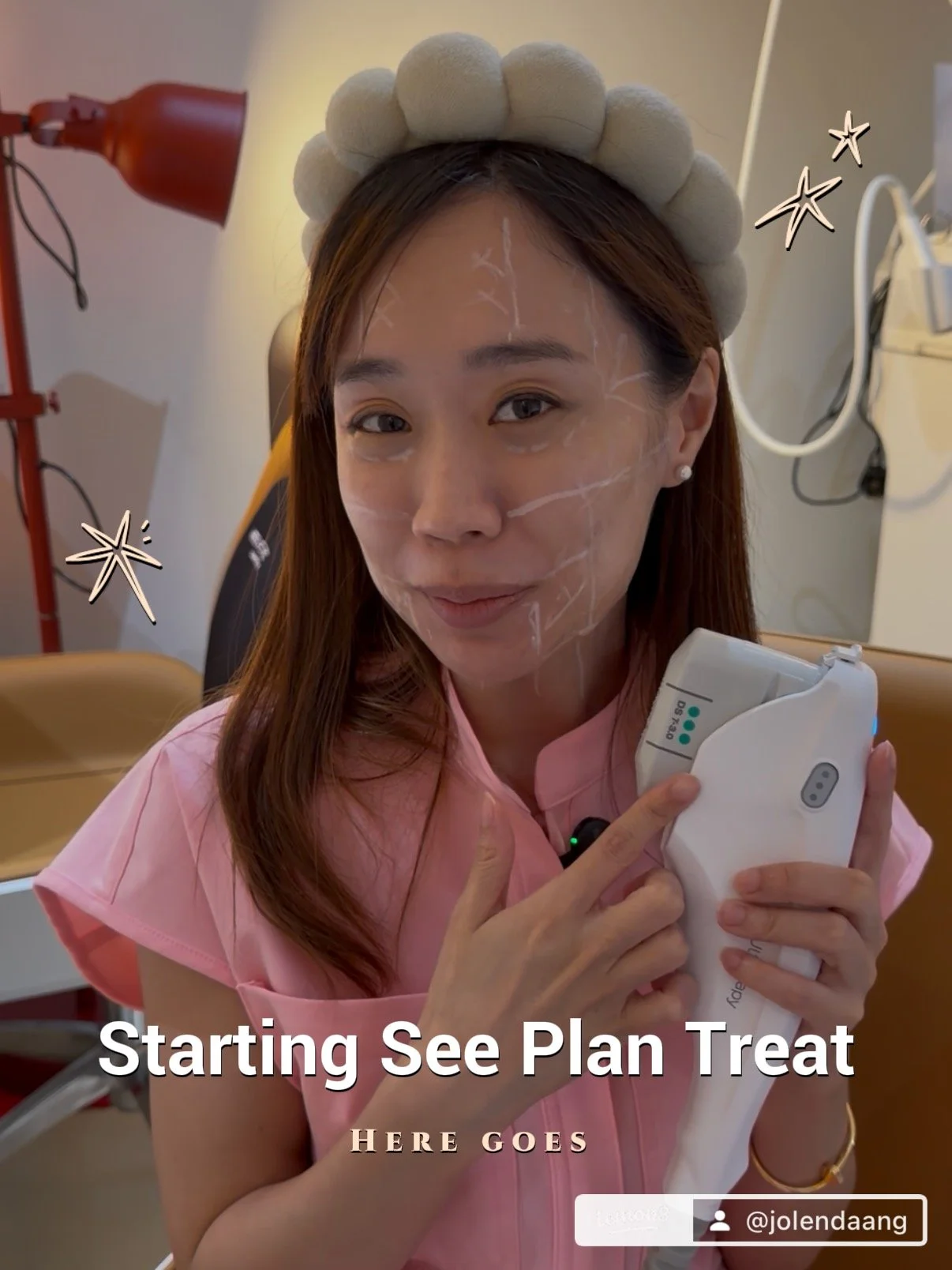
At Emberwood Aesthetics, we use the Ultherapy PRIME system with its See, Plan, Treat approach.
This means that rather than simply delivering a predetermined number of shots, the doctor should assess the patient's anatomy, identify the appropriate treatment depths and develop an individualised treatment plan.
Step 1: Consultation: How Many Ultherapy PRIME Shots Do You Actually Need?
Before starting, one of the most important steps is deciding how many treatment lines, commonly referred to as shots, are appropriate.
This depends on several factors, including:
The areas being treated, such as the lower face, jawline, cheeks or neck.
The degree of skin laxity.
Facial anatomy and tissue thickness.
The treatment depths selected.
The patient's individual goals and expectations.
My advice: Always ask your doctor how many shots are planned for your treatment.
I have encountered patients who shared that they were not shown their final shot count after undergoing Ultherapy treatments elsewhere.
Personally, I believe patients should understand what they are paying for.
The number of shots should be discussed during the consultation, and patients can also ask to see the final treatment count on the machine after their procedure.
However, more shots do not automatically mean better results. What matters is whether the appropriate areas and tissue depths are being treated safely and effectively.
Step 2: Numbing Cream: How Long Does Ultherapy PRIME Take?
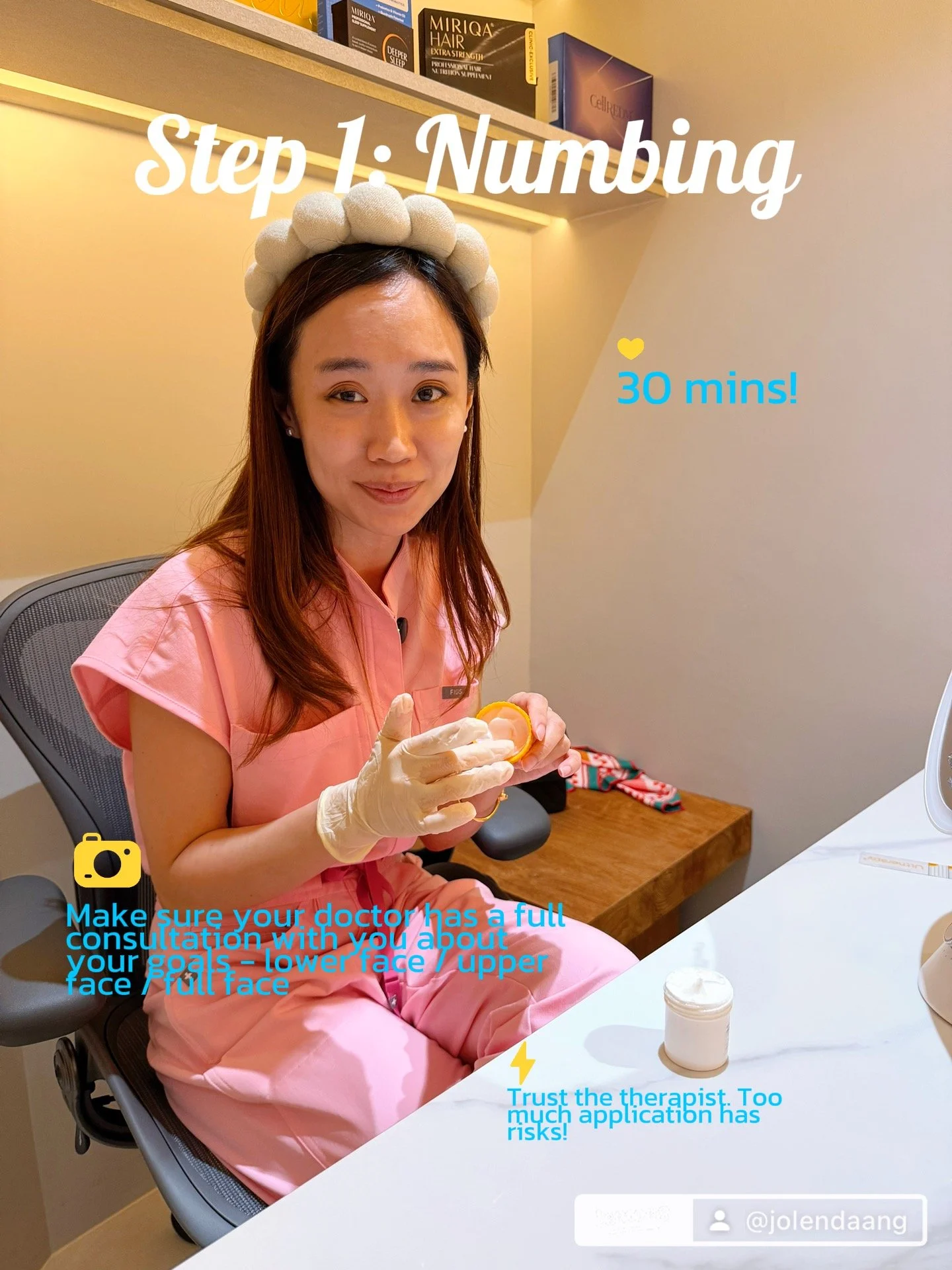
My entire Ultherapy PRIME appointment took approximately 1 hour 15 minutes to 1 hour 30 minutes, including preparation.
We started by applying topical numbing cream for approximately 30 minutes.
Although numbing cream can help with surface discomfort, it does not completely eliminate the deeper sensations associated with focused ultrasound energy.
This is because Ultherapy PRIME delivers energy beneath the skin, where topical anaesthesia has a limited effect.
After removing the numbing cream and cleansing the skin, we proceeded with ultrasound gel and treatment planning.
The actual treatment duration depends on the number of shots, areas treated and individual treatment plan.

Step 3: Why Is Ultrasound Gel Applied During Ultherapy PRIME?
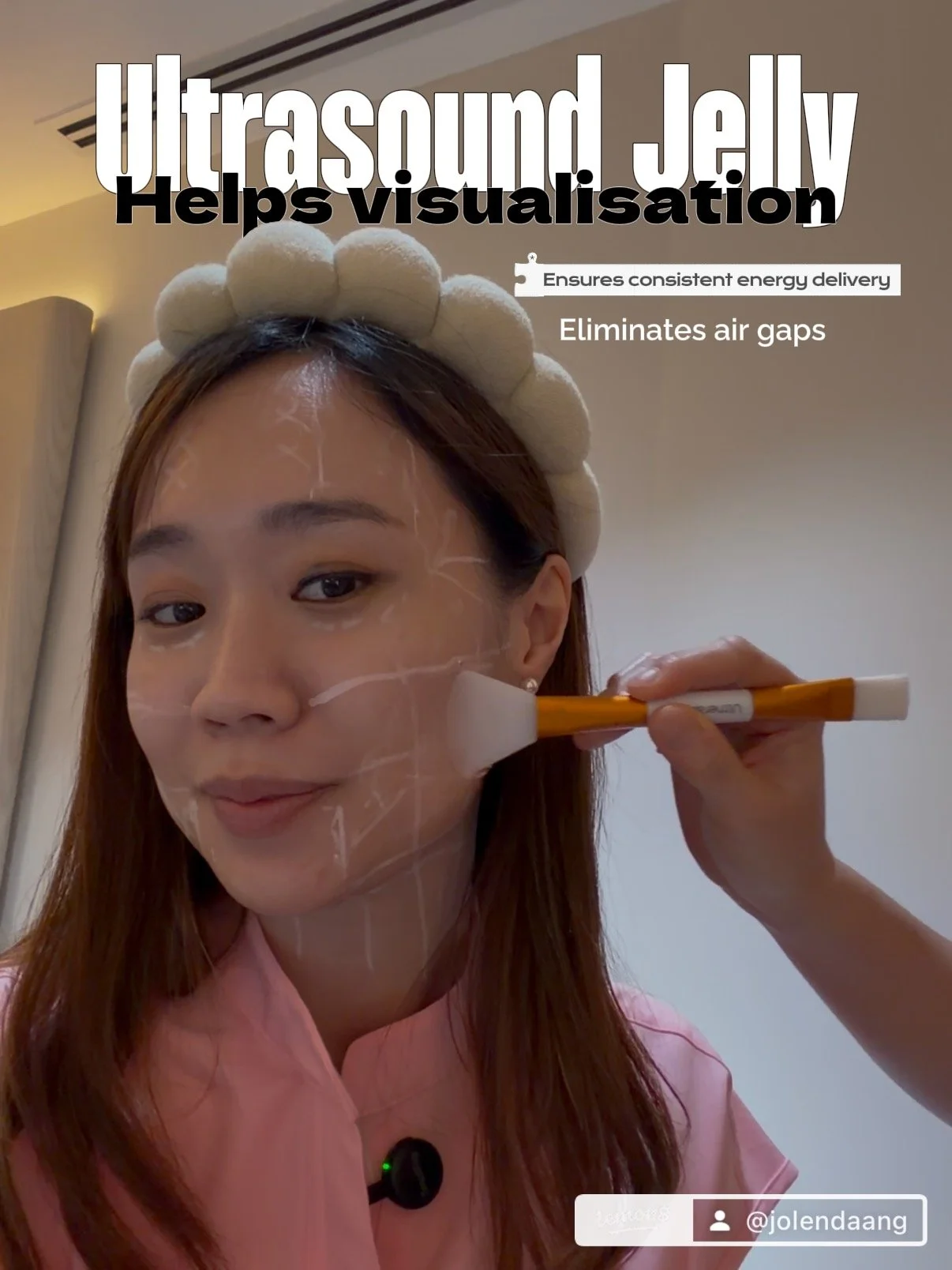
Before delivering the ultrasound energy, a layer of ultrasound gel is applied to the skin.
This is not just for comfort!
The gel serves an important technical purpose: it allows ultrasound waves to travel efficiently between the treatment transducer and the skin by minimising air gaps.
Without proper contact, ultrasound transmission can be compromised.
The gel also facilitates the real-time ultrasound imaging that makes Ultherapy PRIME different from non-imaging ultrasound tightening devices.
Step 4: Real-Time Ultrasound Imaging: Why It Matters
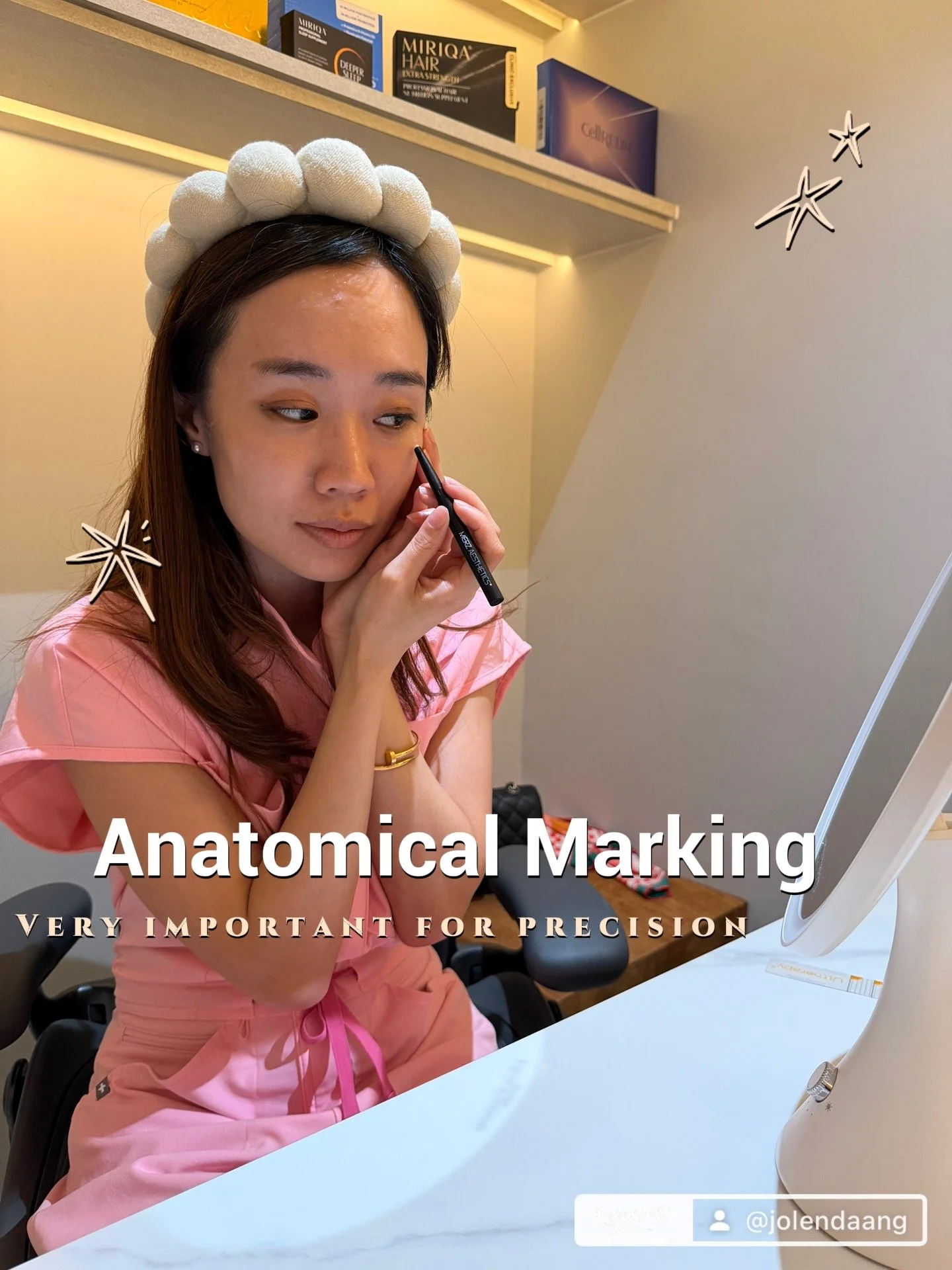
One of the features I appreciate most about Ultherapy PRIME is its ability to visualise the underlying tissue layers before delivering treatment.
Different parts of the face have different tissue thicknesses and anatomical structures.
Ultherapy PRIME offers treatment transducers designed to deliver energy at depths such as:
1.5 mm: More superficial tissue layers.
3.0 mm: Deeper dermal and subdermal tissue, depending on anatomy.
4.5 mm: Deeper tissue planes, including the superficial musculoaponeurotic system (SMAS) region where anatomically appropriate.
These depths are not interchangeable, and not every patient requires all three.
With real-time imaging, the doctor can assess the visualised tissue planes and plan treatment accordingly.
This is particularly important because the goal is not simply to deliver ultrasound energy, but to deliver it to the appropriate tissue depth.
My tip: Ask your doctor whether they are using real-time ultrasound imaging throughout the procedure and how they determine the treatment depths.
Step 5: The Actual Treatment: How Painful Is Ultherapy PRIME?
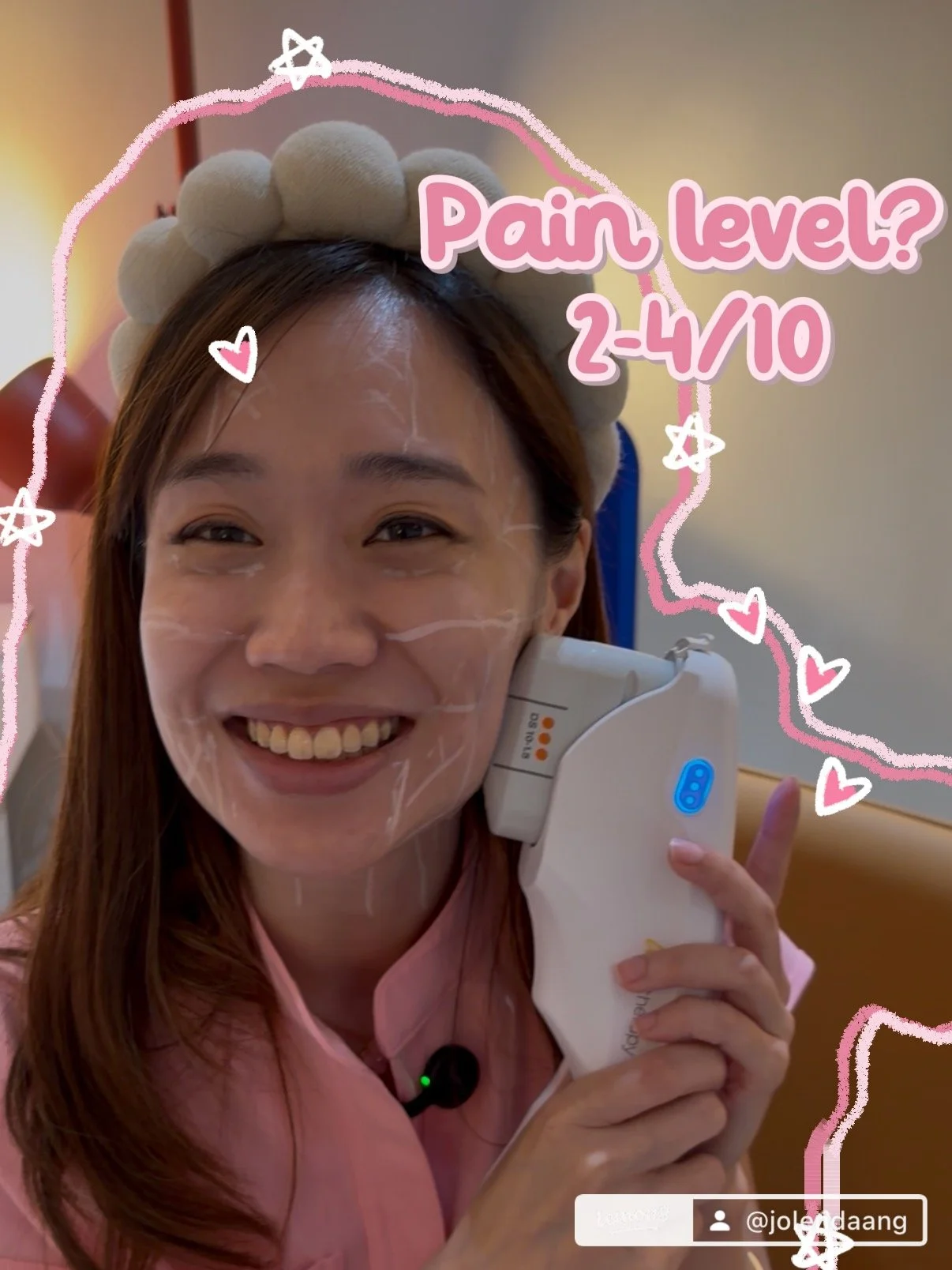
Now for the question everyone wants answered!
My personal Ultherapy PRIME pain rating: 2–4/10.
I found the treatment very bearable overall.
The sensation is quite different from a laser or an injectable treatment.
Rather than a sharp surface sting, I experienced brief bursts of warmth, tingling and a deeper prickling or aching sensation beneath the skin.
Each pulse lasted only a short moment.
Some areas were more sensitive than others, particularly where the tissue was thinner or closer to underlying bone.
For me, the discomfort was manageable, and I could continue the procedure without significant difficulty.
However, pain is subjective. My experience of 2–4/10 does not mean everyone will experience the same level of discomfort.
Factors affecting pain include treatment depth, energy settings, anatomical location, individual pain tolerance and the comfort measures used.
At Emberwood Aesthetics, we can discuss appropriate comfort measures before treatment and adjust the approach according to individual needs.
Step 6: What Happens Immediately After Ultherapy PRIME?
One of the advantages of Ultherapy PRIME is that it generally involves little downtime.
After treatment, patients may experience:
Mild redness.
Temporary swelling.
Tenderness or a bruised sensation beneath the skin.
Occasional tingling or sensitivity in the treated areas.
These effects are generally temporary, although their duration varies.
More significant adverse effects, including burns, nerve-related symptoms or prolonged discomfort, are uncommon but possible.
Most patients can return to their usual daily activities relatively quickly, although this depends on their individual response.
Importantly, Ultherapy PRIME is not a treatment where you should expect to see the full result immediately after the session.
The collagen remodelling process takes time.
When Will I See Results From Ultherapy PRIME?
This is something I always explain to patients: Ultherapy PRIME results are gradual.
Although some people may notice early changes, meaningful improvements in skin firmness and lifting generally develop over the following months.
Here is the approximate timeline I discuss with patients:
What to expect Immediately after: Possible temporary tightness or mild swelling; not the final result
Around 1 month: Some patients may begin noticing subtle tightening
2–3 months: Improvements may become more noticeable as collagen remodelling progresses
3–6 months: Further gradual changes may develop
Around 12 months: Some patients continue to experience benefits, although longevity varies
For many patients, the effects may last approximately a year, sometimes longer, depending on age, skin condition, degree of laxity and natural ageing.
However, these are general expectations rather than guaranteed outcomes.
It is also important to understand that Ultherapy PRIME does not stop the natural ageing process.
How Do You Know if an Ultherapy PRIME Machine Is Authentic?
This is something I think patients should pay more attention to.
When choosing an Ultherapy PRIME provider, don't hesitate to ask about the authenticity of the equipment and consumables being used.
My advice is to ask the clinic to verify both the machine and the treatment transducers (cartridges).
Authenticity verification procedures can vary by market and manufacturer, so patients should follow the applicable official verification process rather than assuming that a photograph or logo alone confirms authenticity.
At Emberwood Aesthetics, we believe patients should feel comfortable asking questions about the equipment used during their treatments.
Why Is Ultherapy PRIME So Expensive? Should You Choose the Cheapest Clinic?
Ultherapy PRIME treatments can vary considerably in price between clinics in Singapore.
There are several reasons for this, including the cost of the equipment, genuine consumables, number of treatment lines and the experience of the treating doctor.
However, one important point is often overlooked.
A cheaper Ultherapy PRIME package may include fewer shots or a smaller treatment area.
For example, two clinics may both advertise a lower-face Ultherapy PRIME treatment, but the proposed treatment plans may differ substantially.
This does not automatically mean that the more expensive treatment is better, or that the clinic offering fewer shots is providing inadequate treatment.
It means patients should compare what is actually included.
Before booking, I recommend asking:
How many shots are included?
Which areas of the face or neck will be treated?
Which treatment depths are planned?
Will the doctor use real-time ultrasound imaging?
Is the treatment performed using authentic equipment and transducers?
Will I be able to see my final shot count?
These questions help patients make more informed decisions rather than comparing prices alone.
How Do You Choose a Good Ultherapy PRIME Doctor in Singapore?
Personally, I would not choose an Ultherapy PRIME provider based on price alone.
Ultherapy PRIME is a medical aesthetic procedure, and treatment planning requires an understanding of facial anatomy, tissue depth and appropriate energy delivery.
I would recommend choosing a doctor who:
1. Has experience performing Ultherapy treatments
Experience can help with anatomical assessment, treatment planning and recognising situations where Ultherapy PRIME may not be suitable.
2. Understands the See, Plan, Treat approach
The doctor should be able to explain how real-time ultrasound imaging is used to guide the procedure.
3. Discusses your treatment plan transparently
You should understand which areas are being treated, how many shots are planned and what results are realistic.
4. Explains the limitations of the procedure
Not every patient is an ideal candidate for Ultherapy PRIME.
Patients with significant skin laxity or excess skin may require other treatments, and non-surgical tightening cannot reproduce the results of a surgical facelift.
5. Prioritises appropriate treatment over simply delivering more shots
A carefully planned treatment is more important than an impressive-looking number on the machine.
Is Ultherapy PRIME Worth It? My Perspective as a Doctor and Patient
Having experienced Ultherapy PRIME myself, I can better appreciate the questions patients have about the procedure.
For me, the pain was manageable at around 2–4/10, and the treatment experience was straightforward.
What I particularly value about Ultherapy PRIME is the combination of microfocused ultrasound energy with real-time visualisation.
However, as with any aesthetic treatment, the technology is only one part of the equation.
Appropriate patient selection, an individualised treatment plan, an experienced treating doctor and realistic expectations are equally important.
If you are considering Ultherapy PRIME for mild-to-moderate skin laxity, it may be a suitable non-surgical option.
But I would always recommend having a proper consultation before deciding whether the treatment is right for you.
And most importantly, don't be afraid to ask questions about your shot count, treatment depths, machine authenticity and the doctor's experience.
As both a doctor and a patient, I believe transparency is an essential part of aesthetic medicine.
Explore Ultherapy PRIME at Emberwood Aesthetics, Singapore
At Emberwood Aesthetics, located in Orchard, Singapore, we offer Ultherapy PRIME treatments using real-time ultrasound imaging to guide individualised treatment planning.
Our approach focuses on understanding your facial anatomy, degree of skin laxity and aesthetic goals before recommending an appropriate treatment plan.
Learn more about our Ultherapy PRIME treatments in Singapore, including treatment suitability, procedure details and commonly asked questions, on our dedicated treatment page.
This article reflects Dr Jolenda Ang's personal treatment experience and general medical information. Pain levels, treatment plans, recovery and results vary between individuals. A medical consultation is necessary to assess suitability and discuss potential risks.