
Polynucleotide (PN) Skin Booster Singapore Salmon DNA Skin Booster | 婴儿针
At Emberwood Aesthetics, treatment begins with a personalised skin assessment to determine whether PN skin booster treatment is appropriate for your individual concerns and treatment goals.
Polynucleotide (PN) Skin Booster in Singapore
A Doctor-Led Approach to Skin Quality, Fine Lines & Skin Rejuvenation
Polynucleotide (PN) skin boosters are injectable treatments containing purified DNA-derived polynucleotides, sourced from salmon. Sometimes referred to as “salmon DNA skin boosters” or 婴儿针, PN treatments may be considered for selected concerns such as fine lines, reduced skin elasticity, enlarged pores and changes in overall skin quality. At Emberwood Aesthetics, treatment begins with a personalised skin assessment to determine whether PN skin booster treatment is appropriate for your individual concerns and treatment goals.
What Is a Polynucleotide (PN) Skin Booster?
Polynucleotides are chains of nucleotides—the building blocks of DNA. PN injectables used in aesthetic medicine contain purified DNA-derived polynucleotides and are commonly produced from salmon.
Unlike treatments primarily intended to replace facial volume or change facial contours, PN skin boosters are generally used with an emphasis on skin quality and gradual skin remodelling.
How Do Polynucleotide Skin Boosters Work?
PN skin boosters are injected into selected layers of the skin through multiple small injection points. Rather than creating substantial facial volume, treatment is intended to influence the local skin environment and support gradual changes in skin quality.
Which Areas Can Be Treated With Polynucleotides?
Polynucleotide injectables may be used on several areas where the skin is thin, dehydrated or showing early signs of ageing, including:
Full face
Under-eye area
Cheeks
Forehead and temples
Neck
Décolletage
Selected acne-scarred areas
Different polynucleotide formulations have different concentrations and properties. Dr Jolenda will recommend the appropriate product and technique for the area being treated during your consultation.

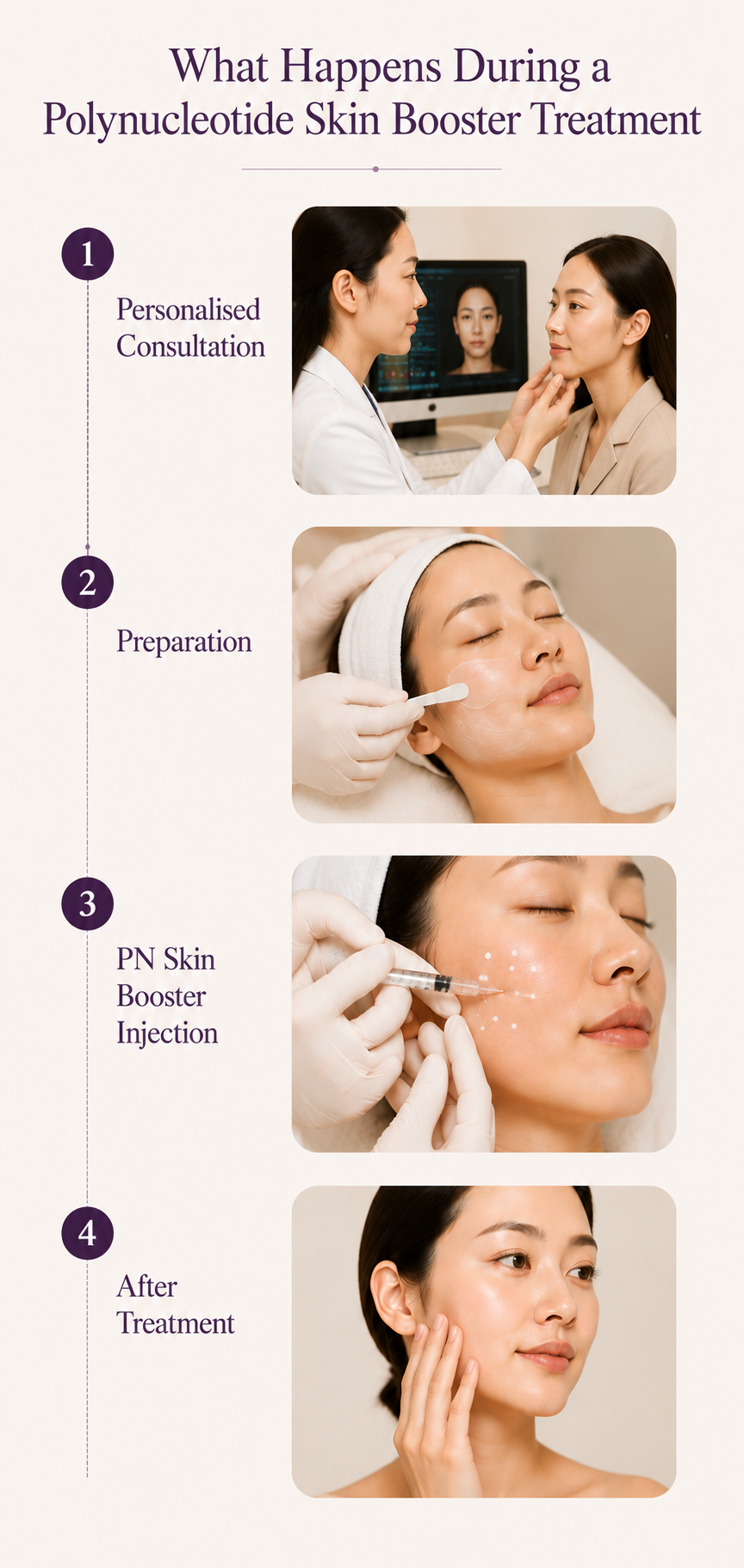
What Happens During a Polynucleotide Treatment?
Personalised Consultation
Your appointment begins with a consultation and assessment of your medical history, skin condition and treatment goals.
Preparation
If treatment is suitable, the skin is cleansed and topical numbing cream may be applied for comfort.
PN Skin Booster Injection
The polynucleotide solution is then administered through multiple small injections across the treatment area. Other methods of injections include using a cannula or injector gun (Dermashine Pro) which is more comfortable. Dr Jolenda will have an in-depth discussion to understand your treatment goals before proceeding.
Treatment time and injection technique vary according to the area and product selected.
After Treatment
Small raised bumps, redness or mild swelling can occur immediately afterwards and usually settle progressively. These effects vary according to individual response, treatment area and injection technique.
Can Polynucleotides Be Used Under the Eyes?
Polynucleotide treatment may be considered for patients concerned about fine lines, crepey texture or reduced skin quality around the eyes.
As the under-eye area is delicate, a medical assessment is important. Polynucleotides do not treat every cause of dark eye circles or under-eye hollowness. Pigmentation, visible blood vessels, volume loss and anatomical shadowing may require different approaches.
Dr Jolenda will assess the underlying cause before advising whether polynucleotides, another treatment such as the use of Injectable Collagen Gel, or a combination plan would be most appropriate.
Can PN Skin Boosters Be Combined With Other Treatments?
Skin ageing and skin-quality concerns can involve multiple factors, and one treatment may not address every concern.
Where clinically appropriate, PN skin boosters may be incorporated into a broader personalised treatment plan alongside other doctor-recommended treatments addressing concerns such as skin laxity, facial structure, pigmentation or skin texture.
The timing and sequencing of combination treatments should be individualised according to the procedures involve your, skin condition, and your medical assessment.
Why Choose Emberwood Aesthetics for PN Skin Booster Treatment?
Doctor-Led, Personalised Treatment
Every treatment begins with an assessment of your skin condition, concerns and goals, so PN is recommended only when it is appropriate for you.
The Right Skin Booster for the Right Concern
Different skin boosters work differently. Your treatment is selected according to what your skin actually needs rather than following a standard formula.
Rejuran® Certified Injector
Dr Jolenda is a Rejuran® Certified Injector, with product-specific training in PN injection techniques and treatment planning.

Why Choose a Rejuran® Certified Injector?
Expertise You Can Feel Confident In
Injectable treatments depend not only on the product selected, but also on the doctor’s assessment, treatment planning, and injection technique.
Dr Jolenda Ang is a Rejuran® Certified Injector who has undertaken dedicated training in polynucleotide treatments at Rejuran facilities in South Korea and at the Rejuran Academy in Singapore. She has also been appointed an Advanced Certified Injector by the Rejuran Academy, with training covering patient assessment and advanced injection techniques.
This product-specific training complements her medical experience and allows each treatment to be planned according to the patient’s skin condition, treatment area, anatomy and individual goals.
From selecting the appropriate polynucleotide formulation to determining the injection technique, depth and placement, treatment is personally planned and performed by Dr Jolenda.
When choosing an injectable treatment, the product is only one part of the decision. The training, experience, and clinical judgement of the doctor performing your treatment are equally important.
Frequently Asked Questions about DNA Salmon Healer
-
A course of approximately three sessions, commonly spaced several weeks apart, may be recommended for initial treatment. Maintenance sessions can subsequently be considered according to your skin condition, response and personal goals.
There is no single schedule that is appropriate for everyone. Your treatment plan will be personalised following a doctor’s assessment.
-
Polynucleotide treatment is intended to produce gradual changes rather than an immediate volumising effect. Some patients notice improved hydration or skin texture after the initial sessions, while further changes may become apparent as the treatment course progresses.
The timing and degree of improvement vary according to age, baseline skin condition, lifestyle, treatment area and the polynucleotide formulation used.
-
Common temporary effects can include:
Small bumps at the injection points
Redness
Mild swelling
Tenderness
Bruising
These effects generally improve over the following days, although recovery differs between individuals and treatment areas. Your doctor will provide appropriate aftercare instructions.
-
Polynucleotide injections may not be suitable for everyone. Treatment may need to be avoided or postponed in people who are pregnant or breastfeeding, have an active infection or inflammation in the treatment area, have certain allergies or have relevant medical conditions.
-
Patients may experience brief stinging or pressure during the injections. Topical numbing cream may be used to improve comfort. Dr Jolenda has several adopted several Korean injection methods to reduce pain.
-
Polynucleotides may be considered as part of a treatment plan for selected acne scars and overall skin repair. However, different scar types may require treatments such as fractional laser, radiofrequency microneedling, subcision or combination therapy. A medical assessment is required.
Ready to Take the First Step?
Every skin is unique. Book a consultation with Dr Jolenda to discuss your concerns and receive a personalised treatment plan tailored to your skin and goals.